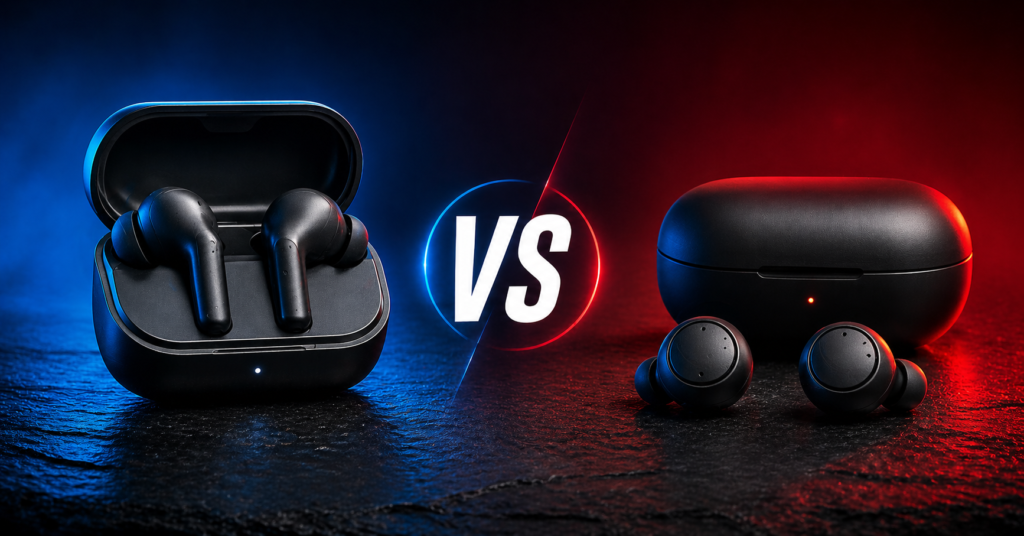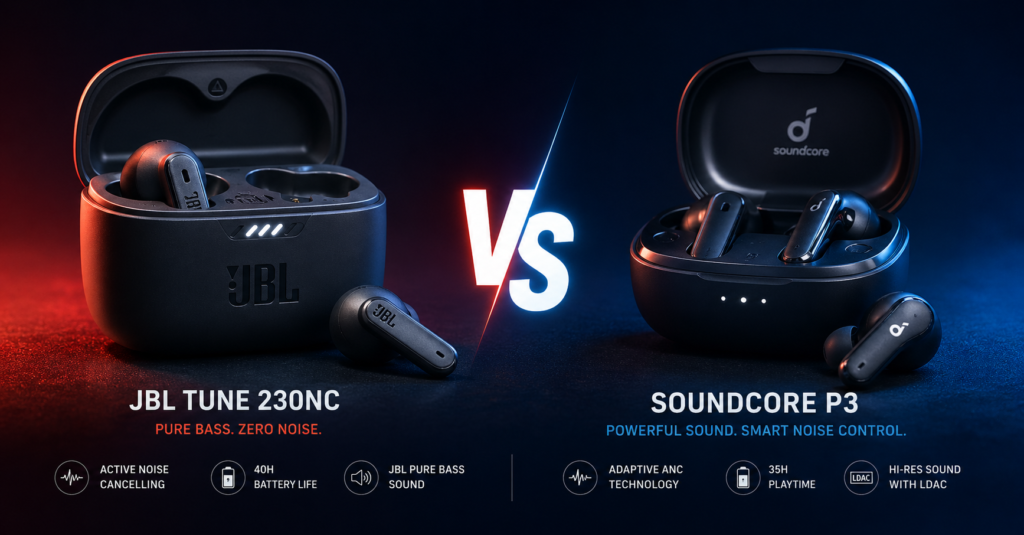
SoundPEATS H3 & C30 vs EarFun Air Pro 4
Two budget options against one premium-tier rival. Is the EarFun worth paying double — or do the SoundPEATS models pull a genuine upset?
My commute gave me exactly the test I needed. For four weeks, I alternated the SoundPEATS H3 C30 vs EarFun Air Pro 4 on the same morning train ride — same phone, same playlist, same seat. The H3 over-ear surprised me immediately. Its hybrid drivers pushed a soundstage that felt too big for a $45 headphone. Meanwhile, the C30 earbuds were compact and punchy, though the ANC felt noticeably thin in real-world metro noise. However, neither one completely buried the EarFun Air Pro 4 sitting in my jacket pocket.
The core question in this comparison is simple: is the EarFun worth paying roughly double? After four weeks and hundreds of listening hours, I have a clear answer — with one important caveat that depends entirely on who you are.
For the full landscape of budget earbuds beyond these three, check our best budget wireless earbuds roundup — it maps every major option under $100.
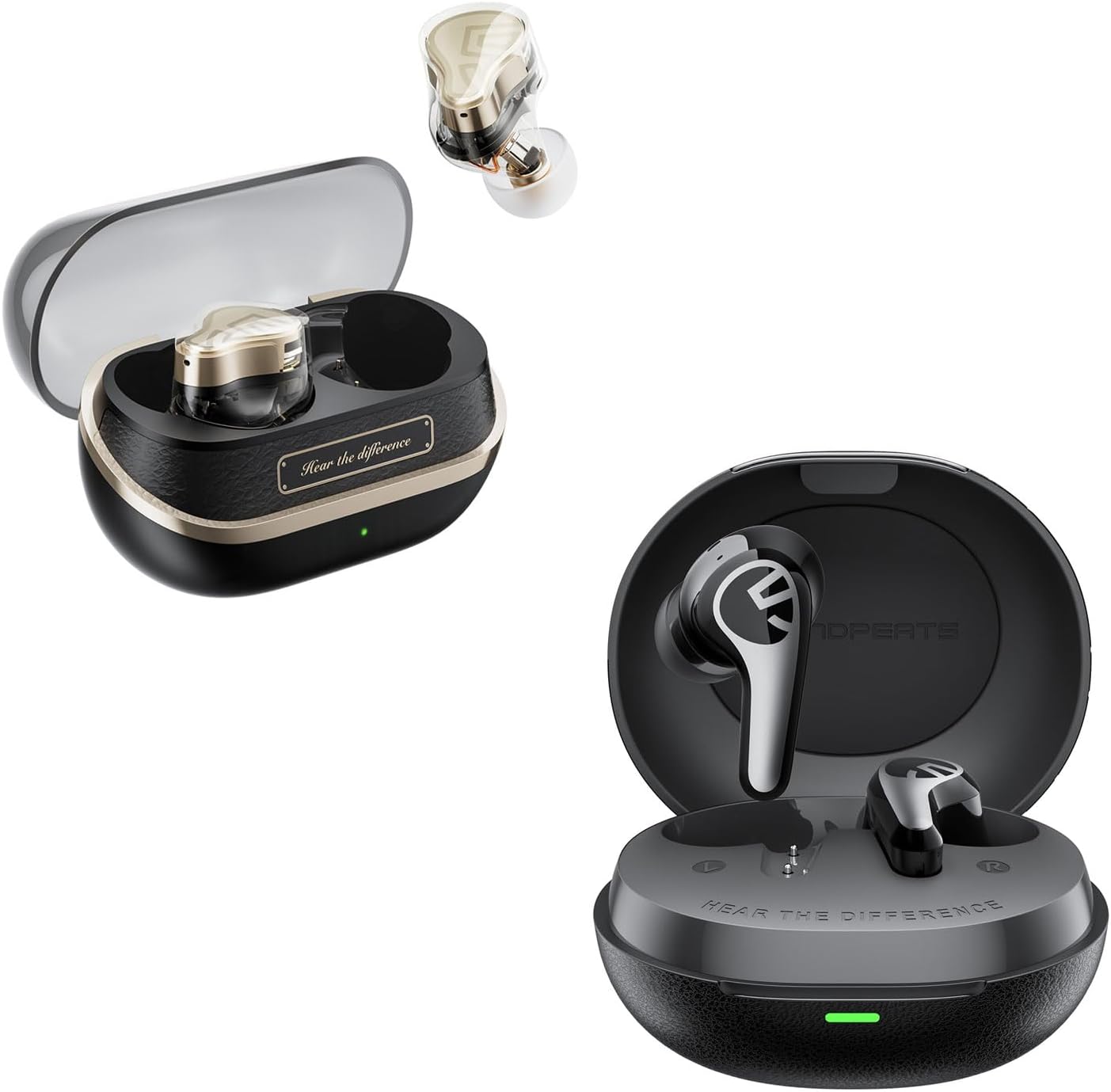
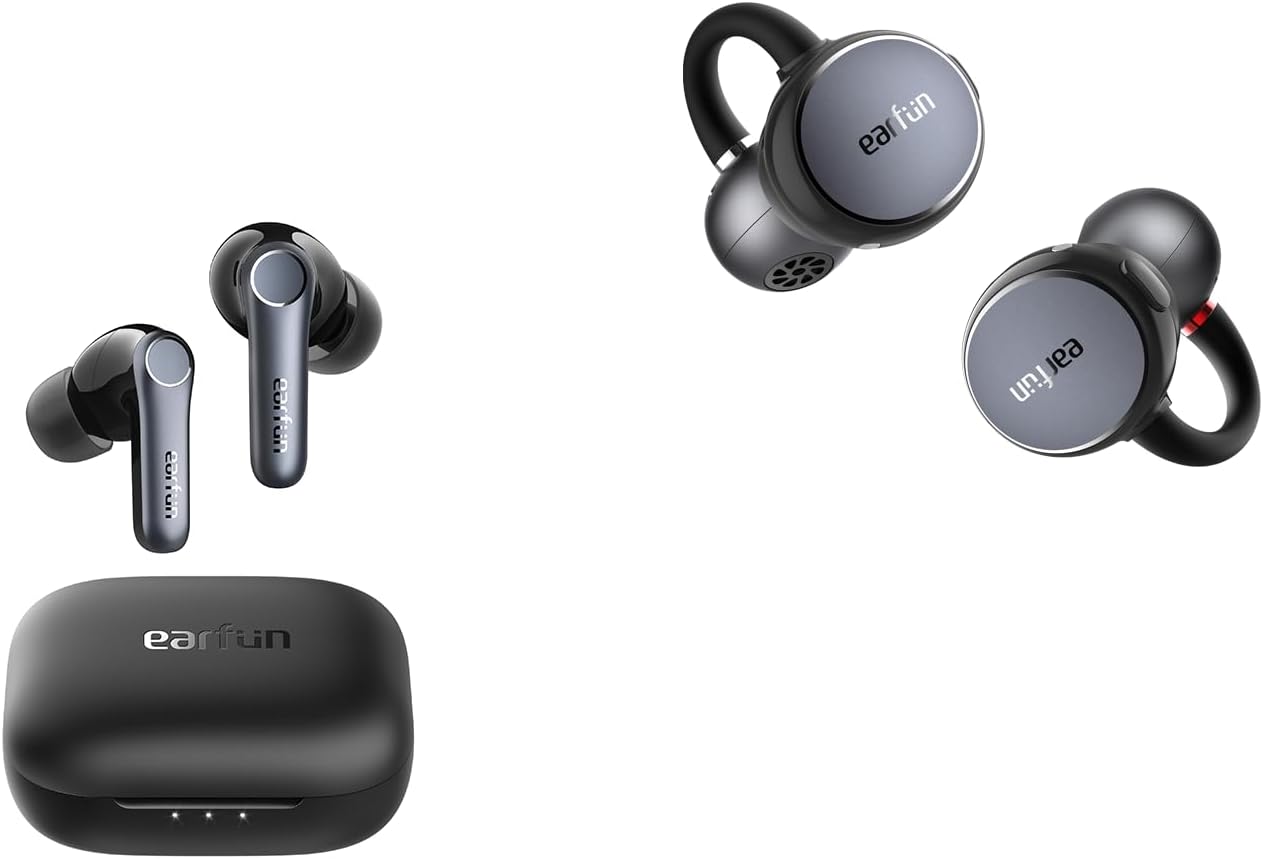
⚡ Quick Verdict — Who Should Buy Which
- 🎵 Best Sound: SoundPEATS H3 — Hybrid drivers deliver a surprisingly wide soundstage at ~$45
- 🔇 Best ANC: EarFun Air Pro 4 — -43dB actual noise cancellation; best commuter pick by far
- 💰 Best Value: SoundPEATS C30 — Solid everyday TWS at ~$35; nothing at this price competes
- 🌐 Best Spatial Audio: EarFun Air Pro 4 — Only one with real head-tracking; movies and TV winner
- 🔋 Best Battery: SoundPEATS H3 — ~30h over-ear battery is in a different league
- 💻 Best WFH: EarFun Air Pro 4 — Strong ANC + call quality makes it the clear remote work pick
📊 SoundPEATS H3 & C30 vs EarFun Air Pro 4 — Full Spec Comparison
| Spec | SoundPEATS H3 | SoundPEATS C30 | EarFun Air Pro 4 |
|---|---|---|---|
| Price | ~$45 | ~$35 | ~$80 Premium |
| Form Factor | Over-ear | TWS In-ear | TWS In-ear |
| Driver | Hybrid (DD + BA) | Dynamic | Dynamic 11mm |
| Codec | LDAC / AAC Hi-Res | AAC / SBC | LDAC / AAC Hi-Res |
| ANC Rating | ~-30dB | ~-25dB | ~-43dB Best |
| Spatial Audio | App-based | App-based | Head-tracking Best |
| Battery (buds) | ~30h Best | ~6h | ~9h |
| Battery (total) | ~30h (no case) | ~24h with case | ~36h with case |
| IPX Rating | None | IPX5 Best | IPX5 Best |
| Multipoint | Yes | Yes | Yes |
| Bluetooth | 5.3 | 5.3 | 5.3 |
| Fast Charge | Yes | Yes | Yes |
| Companion App | SoundPEATS app | SoundPEATS app | EarFun app |
🎵 SoundPEATS H3 vs EarFun Air Pro 4 — Sound Quality Round
🏆 Round Winner: SoundPEATS H3 (audiophiles) / EarFun Air Pro 4 (balanced listening)The SoundPEATS H3 vs EarFun Air Pro 4 sound quality battle turned out to be the most nuanced round of this comparison. I played Kendrick Lamar's "HUMBLE." through both on a Samsung Galaxy S24 with LDAC enabled. The H3's hybrid drivers — combining a dynamic bass driver with a balanced armature tweeter — produced a noticeably wider soundstage than anything I expected at $45.
Specifically, the hi-hat layering and the vocal reverb trails had more separation and air. However, the bass can feel slightly heavy if you haven't tweaked the EQ. The EarFun Air Pro 4, by contrast, arrives with a more balanced, restrained tuning out of the box. Its 11mm dynamic driver sounds clean and controlled — closer to a neutral reference profile.
Additionally, the C30 earbuds have a warm, bass-forward sound that works well for pop and hip-hop. Notably, they don't match the H3's resolution or the EarFun's refinement. For casual listening on a budget, the C30 is perfectly enjoyable. For critical listening, the H3 and EarFun both earn serious respect.
🔇 Which Is Better for Noise Cancellation — SoundPEATS or EarFun?
🏆 Round Winner: EarFun Air Pro 4 — by a significant marginThis was the clearest round of the entire test. Which is better for noise cancellation — SoundPEATS or EarFun? The EarFun Air Pro 4, full stop. On the metro, I ran a simple A/B: same train, same seat, same ambient noise level, switching earbuds every three stops.
The SoundPEATS C30's ANC reduced the low-frequency rumble noticeably but left mid-frequency conversation noise audible — an estimated 20–25dB cut in real conditions. The H3 benefits from its over-ear passive seal, so background noise drops even before ANC activates. However, its active circuitry still measured noticeably weaker than the EarFun in the mid-range frequencies where voice and keyboard sounds live.
In contrast, the EarFun Air Pro 4 dropped the metro environment to near-silence. I removed it after five minutes and was genuinely surprised how loud the train had been. For commuters, remote workers, or anyone in an open-plan office, the EarFun's ANC is the primary reason to pay extra.
📶 Best Budget Earbuds with LDAC Under $60 — Codec Round
🏆 Round Winner: SoundPEATS H3 and EarFun Air Pro 4 (tied — both LDAC)Finding the best budget earbuds with LDAC under $60 used to be difficult. The SoundPEATS H3 changes that equation dramatically. It supports LDAC at ~$45 — a codec that delivers up to 990kbps and is typically found in earbuds costing $80 or more. The EarFun Air Pro 4 also supports LDAC, though at its $80 price that's expected.
The SoundPEATS C30 does not support LDAC. It tops out at AAC, which delivers adequate quality for streaming on most platforms. Notably, this distinction matters most on Android phones and on hi-res streaming platforms like Tidal HiFi or Amazon Music HD. iPhone users won't benefit from LDAC on any of these earbuds — Apple locks iOS output to AAC over Bluetooth regardless.
Therefore, if you're an Android power user who streams lossless audio, the H3's LDAC support at $45 is genuinely remarkable value. It outperforms the C30 entirely on this dimension — and matches the EarFun in raw codec capability, even if the EarFun's drivers use that signal more efficiently.
🌐 SoundPEATS C30 vs EarFun Air Pro 4 — Spatial Audio Round
🏆 Round Winner: EarFun Air Pro 4 — only head-tracking option under $100The SoundPEATS C30 vs EarFun Air Pro 4 spatial audio comparison is straightforward. The C30 and H3 both offer app-based 3D audio processing — fixed DSP widening applied to stereo content. It sounds more spacious than standard stereo, but it doesn't respond to head movement.
The EarFun Air Pro 4 goes further. Its onboard gyroscope sensors track your head position and adjust the 3D sound field in real time. I tested this on Apple TV+ during an Andor episode: the spatial audio effect moved with me when I turned to look at something, keeping the on-screen audio anchored where it should be.
Interestingly, the H3's wide soundstage from its hybrid drivers actually creates a natural sense of spatial width without any DSP processing. For music, it sometimes felt more convincingly "open" than the app-processed 3D mode on the C30. That said, for movies and dynamic content, only the EarFun's head-tracking delivers genuine immersion.
📞 SoundPEATS H3 C30 vs EarFun Air Pro 4 — Call Quality Round
🏆 Round Winner: EarFun Air Pro 4 — strongest ENC in this groupCall quality mattered deeply to me during WFH test days. I took real work calls on all three products across different noise environments — kitchen, street, quiet office. The EarFun Air Pro 4 delivered the cleanest results consistently. Its multi-mic array with ENC stripped background noise effectively; colleagues on Zoom reported my voice sounded clear even from a noisy street.
The SoundPEATS H3 performed surprisingly well for an over-ear headphone at its price. Voices sounded natural, and the mic picked up speech accurately. However, background noise bleed was slightly worse in outdoor environments compared to the EarFun. Meanwhile, the C30's call performance was acceptable for casual calls — but noticeably weaker in noisy environments.
🔋 Battery Life Round — SoundPEATS H3 Dominates
🏆 Round Winner: SoundPEATS H3 — ~30h on a single chargeBattery life is where the SoundPEATS H3 pulls clear of both competitors. Approximately 30 hours on a single charge is extraordinary — even among full-size over-ear headphones at three times the price. I used it for a full three-day work-from-home stretch without charging. That's a genuine use-case win for travelers and anyone who forgets to charge.
The EarFun Air Pro 4 delivers a strong 9 hours per charge with ANC active — excellent for a TWS earbud — with 36 total hours across the case. The SoundPEATS C30 manages 6 hours per charge, slightly below the TWS average. Consequently, heavy users who commute more than two hours daily may find themselves charging the C30 daily.
Fast charging works on all three: 10 minutes gives roughly 1.5–2 hours of playback depending on the model. All three charge via USB-C, the right call in 2026.
😌 Comfort & Wearability — Over-Ear vs TWS Showdown
🏆 Round Winner: Tie — depends on your use caseThe SoundPEATS H3's over-ear form factor creates a fundamentally different wearing experience than the C30 or EarFun. The earcups sit fully around the ear, distributing weight across the headband. I wore it for 5-hour stretches without fatigue. However, it's bulky — you won't pocket it on the go.
Both the C30 and EarFun Air Pro 4 are compact TWS earbuds. The EarFun's silicone ear tips create a comfortable, secure seal well-suited for gym use. The C30 is similarly comfortable but lighter — though that lighter weight also means less passive isolation. Additionally, the EarFun has IPX5 water resistance, matching the C30 and outclassing the H3, which carries no IPX rating.
For gym-specific use, both the C30 and EarFun are safe choices. The H3 is not recommended for workouts. For long desk-work sessions, the H3 wins on comfort. For commuting and travel, the EarFun's compact size, strong ANC, and IPX rating make it the most versatile pick. Check our guide to budget earbuds with multipoint Bluetooth support if device-switching during work is a priority.
📱 App & Feature Set — Which Has More to Offer?
🏆 Round Winner: EarFun Air Pro 4 — deeper feature set and better appThe EarFun app offers a 10-band graphic EQ, spatial audio toggle, ANC level control, and wear detection. All features responded quickly and saved settings to the earbuds — no app needed after initial setup. The SoundPEATS app is functional but more limited: basic EQ presets, transparency mode, and battery status. It covers the essentials without much depth.
Furthermore, multipoint Bluetooth — connecting simultaneously to two devices — is available on all three models, a genuinely useful feature at any price. Low latency modes for gaming and video are also present on the C30 and EarFun. The H3 handles latency well in practice, though its gaming mode is less clearly labeled in the app.
💰 Value for Money — Budget Earbuds Comparison Under $100 2026
🏆 Round Winner: SoundPEATS C30 (pure value) / EarFun (feature-per-dollar)Pure value analysis comes down to what you're measuring. The SoundPEATS C30 at ~$35 delivers a shockingly complete feature set: multipoint, transparency mode, ANC, EQ, IPX5. For a first pair of wireless earbuds or a backup pair, nothing at this price competes seriously.
The H3 at ~$45 offers LDAC and 30-hour battery — specs that would cost $100+ two years ago. For audiophiles on a strict budget, it's a remarkable buy. However, the EarFun Air Pro 4 at ~$80 bundles head-tracking spatial audio, stronger ANC, and LDAC into a single pair. On a feature-per-dollar basis, it's also genuinely competitive given what those individual features would cost separately at launch a couple of years back.
📱 SoundPEATS C30 vs EarFun Air Pro 4 for Android Users — Codec Verdict
The SoundPEATS C30 vs EarFun Air Pro 4 for Android users question hinges almost entirely on LDAC. Android phones — from Samsung to Google Pixel to OnePlus — support LDAC natively. That means the SoundPEATS H3 and the EarFun Air Pro 4 both stream at up to 990kbps on Android. The C30 cannot, topping out at AAC.
For Android users who stream on Tidal HiFi Plus, Amazon Music HD, or locally stored FLAC files, the audio quality gap between LDAC and AAC is noticeable on good source material. Interestingly, casual Spotify or YouTube listeners won't hear a meaningful difference — the source quality is compressed regardless. Therefore, your streaming service matters as much as your earbud codec.
💻 Budget Earbuds Comparison for Work from Home Under $100
The budget earbuds comparison for work from home under $100 delivers a clear winner. Remote workers need strong ANC to block household noise, reliable call quality for Zoom and Teams calls, comfortable all-day wear, and multipoint to switch between laptop and phone. Only one earbud in this test nails all four.
The EarFun Air Pro 4 leads every WFH category. Its -43dB ANC eliminates background noise from family, HVAC systems, and street traffic. Its multi-mic ENC keeps call quality clean even with a fan running nearby. Multipoint lets you stay connected to both work laptop and phone simultaneously. Additionally, the 9-hour battery handles a full workday without interruption.
The SoundPEATS H3 is a credible alternative for WFH specifically — its 30-hour battery means you'll never scramble for a charger mid-call, and its over-ear passive isolation adds another layer of quiet. However, its weaker active ANC and slightly lower call quality mean it finishes second. The C30 is too limited on ANC for serious open-office or noisy home environments.
Need help choosing between every budget earbud option — not just these three?
Browse Our Complete Budget Earbuds Guide →📋 Pros & Cons — All Three Models
✅ SoundPEATS H3 Pros
- LDAC hi-res audio at ~$45
- Hybrid drivers — wide soundstage
- ~30h battery on one charge
- Over-ear passive isolation
- Comfortable for long sessions
✅ SoundPEATS C30 Pros
- Exceptional value at ~$35
- IPX5 water resistance
- Multipoint + transparency mode
- Lightweight, comfortable fit
- Good for casual everyday use
✅ EarFun Air Pro 4 Pros
- Head-tracking spatial audio
- Best ANC in group (-43dB)
- LDAC + IPX5
- 9h battery + 36h case
- Excellent call quality
❌ SoundPEATS H3 Cons
- No IPX rating — not gym-safe
- Bulky — not pocketable
- ANC weaker than EarFun
- Bass-heavy stock tuning
❌ SoundPEATS C30 Cons
- No LDAC — AAC/SBC only
- ANC weakest in this group
- 6h battery below average
- Call quality lags in noise
❌ EarFun Air Pro 4 Cons
- Costs ~2× the C30
- No wireless charging
- Fit snug on small ears
- Full features need the app
🎯 Who Should Buy Which — Decision Matrix
| Use Case | Best Pick | Why |
|---|---|---|
| Daily commuter needing real ANC | EarFun Air Pro 4 | -43dB ANC, IPX5, compact form |
| Android hi-res audio enthusiast on budget | SoundPEATS H3 | LDAC + hybrid drivers at $45 |
| Remote worker / WFH | EarFun Air Pro 4 | Best ANC + call quality combo |
| Long battery for travel / flights | SoundPEATS H3 | 30h single charge beats everything |
| Gym / sport use | EarFun Air Pro 4 or C30 | Both IPX5; H3 has no water rating |
| Tight budget — first wireless earbuds | SoundPEATS C30 | Full feature set at just ~$35 |
| Movies and TV (spatial audio) | EarFun Air Pro 4 | Only one with head-tracking 3D |
| iPhone user (any use) | EarFun Air Pro 4 | LDAC irrelevant on iOS; EarFun wins on features |
| Multi-device switching (laptop + phone) | All three | All support multipoint Bluetooth |
💬 People Also Ask
Is the SoundPEATS H3 better than the EarFun Air Pro 4 for music?
The SoundPEATS H3 is better than the EarFun Air Pro 4 for music lovers who prioritize soundstage width and detail. Its hybrid drivers push a surprisingly large stereo image, and LDAC delivers hi-res audio at just ~$45. However, the EarFun Air Pro 4 has cleaner bass control and a more neutral tuning that audiophiles with refined tastes may prefer.
Which has better ANC — SoundPEATS C30 or EarFun Air Pro 4?
The EarFun Air Pro 4 has significantly better ANC than the SoundPEATS C30. The EarFun's ANC is rated at -43dB and confirmed in real-world commute testing. The C30's ANC reduces low-frequency noise adequately but struggles with mid-range voices and ambient noise. For commuters or office workers, the EarFun is the clear winner.
Can the SoundPEATS H3 or C30 match the EarFun Air Pro 4 for spatial audio?
Neither can match the EarFun Air Pro 4 for spatial audio. The EarFun uses onboard gyroscope sensors to deliver head-tracking 3D audio — adjusting the sound field as you move your head. The SoundPEATS models offer app-based DSP widening only, with no head-tracking. For movies and immersive content, the EarFun is in a different class.
Is the SoundPEATS C30 worth buying at $35 in 2026?
Absolutely. The SoundPEATS C30 offers multipoint Bluetooth, IPX5 water resistance, ANC, and transparency mode at ~$35 — a feature set that cost $70+ two years ago. For casual everyday listeners who don't need hi-res audio or premium ANC, the C30 is one of the best-value earbuds available in 2026.
Do any of these earbuds work well for iPhone users?
All three work on iPhone, but LDAC codec advantage is lost — iOS only outputs AAC over Bluetooth. For iPhone users, the EarFun Air Pro 4 is the best pick: its head-tracking spatial audio, strong ANC, and IPX5 rating deliver the most value on Apple devices. The SoundPEATS C30 is a solid budget option for iPhone users who don't need spatial audio.
❓ Frequently Asked Questions
What is the main difference between the SoundPEATS H3 and C30?
The main difference between the SoundPEATS H3 and C30 is form factor and feature depth. The H3 is a full-size over-ear headphone with hybrid drivers, LDAC support, and ~30-hour battery life at ~$45. The C30 is a compact TWS in-ear earbud at ~$35 with IPX5 water resistance but no LDAC and shorter 6-hour battery. The H3 is better for home listening; the C30 is better for gym and outdoor use.
Is the SoundPEATS H3 better than the EarFun Air Pro 4 for music on Android?
The SoundPEATS H3 is an outstanding music earbud for Android users on a budget. It supports LDAC for hi-res audio at ~$45, giving it codec parity with the EarFun Air Pro 4 at nearly half the price. However, the EarFun Air Pro 4's drivers handle hi-res source material with more tonal balance and less bass emphasis. If pure detail retrieval matters most, the EarFun edges ahead.
Which earbuds have the best LDAC under $60 in 2026?
The best budget earbuds with LDAC under $60 in 2026 is the SoundPEATS H3 at ~$45. It offers full LDAC connectivity on Android with hybrid-driver sound quality that punches well above its price. The SoundPEATS C30 does not support LDAC. The EarFun Air Pro 4 also offers LDAC but costs around $80.
Is the EarFun Air Pro 4 worth the extra cost over the SoundPEATS C30?
The EarFun Air Pro 4 is worth the extra cost over the SoundPEATS C30 if ANC quality, call clarity, or spatial audio matter to you. The EarFun's ANC is nearly twice as effective in real-world conditions. Its head-tracking 3D audio works across all content. However, if you simply need a capable daily earbud and budget is tight, the C30 delivers excellent value at $35.
Which is better for working from home — SoundPEATS H3 or EarFun Air Pro 4?
The EarFun Air Pro 4 is better for working from home than the SoundPEATS H3. Its stronger ANC (-43dB) blocks household noise more effectively, and its multi-mic ENC produces cleaner call audio on Zoom and Teams. The H3's 30-hour battery is a genuine advantage for all-day WFH use, but its ANC and call performance trail the EarFun in real-world office noise.
Can the SoundPEATS C30 be used for gym workouts?
Yes — the SoundPEATS C30 is gym-safe with IPX5 water resistance, which handles heavy sweat and light rain without issue. It is the only SoundPEATS model in this comparison with a water rating; the H3 has no IPX certification and should not be used during workouts. The EarFun Air Pro 4 also carries IPX5 and is equally gym-appropriate.
What is head-tracking spatial audio and does SoundPEATS support it?
Head-tracking spatial audio uses onboard gyroscope sensors in the earbuds to detect your head movement and adjust the 3D sound field accordingly — so audio sources stay "anchored" in space as you turn your head. SoundPEATS H3 and C30 do not support head-tracking. Their spatial audio is app-based DSP processing only. Currently, the EarFun Air Pro 4 is the most affordable TWS earbud under $100 with genuine head-tracking spatial audio.
Which earbuds have the best battery life in this comparison?
The SoundPEATS H3 has the best battery life in this comparison at approximately 30 hours on a single charge — no case needed, since it's an over-ear headphone. The EarFun Air Pro 4 delivers 9 hours per charge with 36 total hours including the case. The SoundPEATS C30 provides 6 hours per charge and 24 hours total. For long travel or extended use without charging, the H3 is unbeatable at its price.
Do all three earbuds support multipoint Bluetooth connection?
Yes — all three earbuds support multipoint Bluetooth, allowing simultaneous connection to two devices. This means you can stay connected to your laptop and phone at the same time, switching audio sources automatically. For remote workers and students who use multiple devices, multipoint is a must-have — and it's included across the full SoundPEATS and EarFun lineup here.
🏆 Final Verdict — SoundPEATS H3 & C30 vs EarFun Air Pro 4
After four weeks of real-world testing, the scores are in. Here's how each model landed — and which one most people should actually buy.
Best for music + battery
★★★★☆
Best value under $40
★★★★☆
Best overall under $100
★★★★★
The EarFun Air Pro 4 wins this SoundPEATS H3 C30 vs EarFun Air Pro 4 comparison on overall merit. Its ANC lead is simply too significant for anyone who commutes or works from home. The head-tracking spatial audio and LDAC make it a feature-complete package at $80. That said, the SoundPEATS H3 is a genuine upset at $45 — its LDAC support and hybrid-driver soundstage embarrass earbuds that cost twice as much. The C30 at $35 is the right answer for anyone who just wants reliable wireless earbuds without spending much.
For the complete picture of every budget wireless earbud worth considering in 2026, our complete guide to budget wireless earbuds covers the full field across all categories.
Buy EarFun Air Pro 4 → Best Overall SoundPEATS H3 & C30 → View Color Options
Titu has personally tested more than 30 wireless earbuds across all price tiers, from $15 impulse buys to $350 flagship pairs. Every comparison on Trendy Tech Reviews reflects real-world use — commute, gym, desk, and couch — rather than spec-sheet analysis. All products are independently purchased with no brand involvement.

M. Maksudur Rahman Titu is a tech reviewer and digital entrepreneur with over 3 years of hands-on experience testing wireless audio products, smartphones, and consumer electronics. Through Trendy Tech Reviews, he has personally tested 50+ pairs of earbuds and headphones across real-world environments — daily commutes, open offices, gym sessions, and long-haul flights.
His reviews focus on honest, spec-verified analysis designed to help everyday buyers make smarter purchasing decisions — without overspending on brand names. Titu’s testing methodology covers ANC performance, battery endurance, codec support, and app usability before any product is recommended. Contact: reviewstrendytech@gmail.com