Sony WF-C700N vs Nothing Ear (a):
Which Budget ANC Earbud Actually Wins?
Two weeks of real-world testing. One definitive verdict on the best budget ANC earbuds under $100.
You have narrowed it down. Both have active noise cancellation. Both sit under $100. You have read the spec sheets and you still cannot decide. That is exactly the situation this Sony WF-C700N vs Nothing Ear (a) comparison was written to resolve.
I wore both for two weeks across commutes, late-night work sessions, and quick reference listens at my desk. One of them surprised me. The other confirmed what I had already suspected from the numbers. The answer is not as obvious as Sony's brand recognition might suggest. Consequently, I want to give you an honest picture of what each earbud actually feels like to live with — not just what the box claims.
Both are among the best ANC earbuds under $100 you can buy right now. However, for most buyers, there is a clear winner. Let me show you which one it is and why.
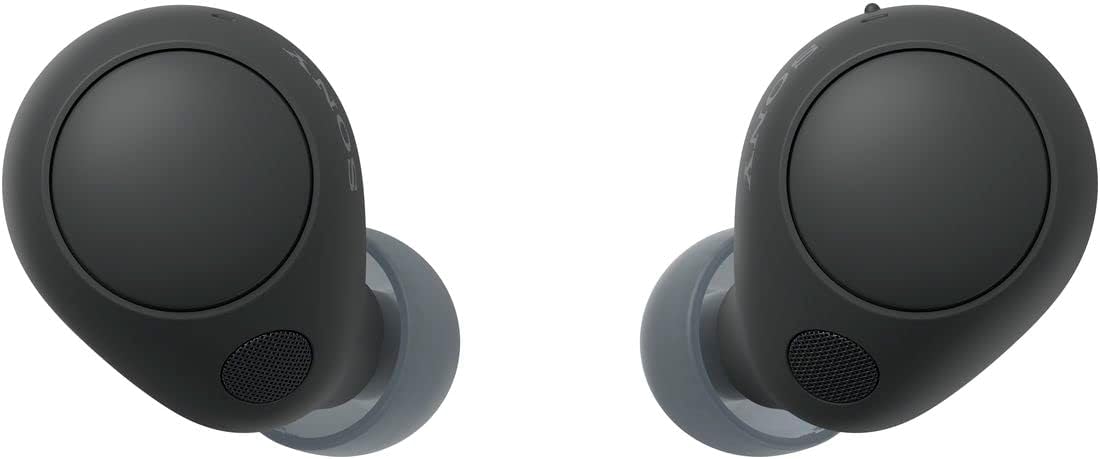
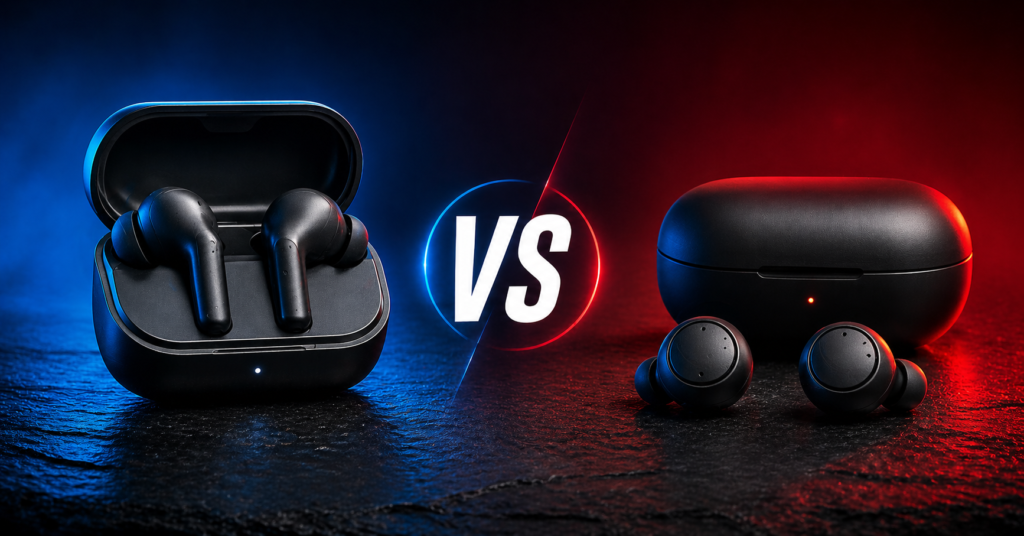
Sony WF-C700N — compact shell, tight passive seal
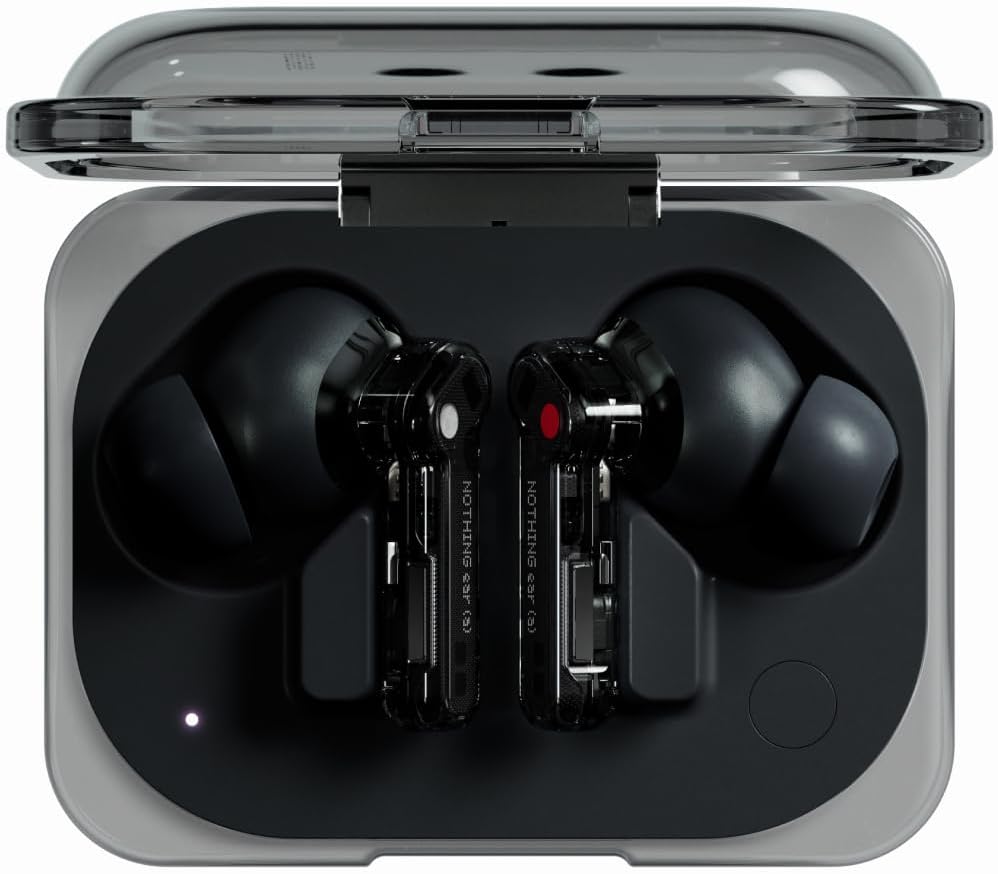
Nothing Ear (a) — stem design, transparent aesthetic
Sony WF-C700N vs Nothing Ear (a) — The Short Answer
The Sony WF-C700N vs Nothing Ear (a) matchup is closer than most people expect. Both earbuds deliver genuine active noise cancellation below $100. Both have IPX4 water resistance, decent battery life, and companion apps with EQ controls. On paper, the gap is narrow.
In practice, the Nothing Ear (a) wins on most metrics. Its ANC is more effective on the mid-frequency sounds — voices, crowd noise, office chatter — that you actually encounter every day. Its transparency mode sounds natural rather than processed. Furthermore, it adds multipoint Bluetooth, which the Sony entirely lacks. The Nothing X app gives you more detailed EQ customization than Sony's Headphones Connect at this price tier.
The Sony WF-C700N has two genuine advantages: a more compact, discreet shell that fits flush in the ear canal, and a slightly lower street price. If you hate the look of earbud stems and prefer a smaller profile, the Sony wins on design. For everything else, the Nothing Ear (a) is the stronger product.
Bottom Line
Most buyers should choose the Nothing Ear (a). It outperforms the Sony on ANC, sound quality, battery life, and app features. The Sony WF-C700N is the right pick if you prefer a stemless design, a lower price point, or Sony's ecosystem.
Full Spec Comparison Table
| Feature | Sony WF-C700N | Nothing Ear (a) |
|---|---|---|
| Price | ~$79 Lower | ~$99 |
| ANC Type | Active Noise Cancellation (integrated) | Active ANC + 3 adjustable levels Better |
| Transparency Mode | Yes (sounds slightly processed) | Yes — natural & clear Better |
| Driver Size | 5mm dynamic | 11mm dynamic Larger |
| Codec Support | SBC, AAC | SBC, AAC |
| Battery — Earbuds | 8 hrs (ANC on) | 9.5 hrs (ANC on) Longer |
| Battery — Total | ~24 hrs with case | ~33 hrs with case More |
| Multipoint Bluetooth | ✗ No | ✓ Yes Win |
| Water Resistance | IPX4 | IPX4 |
| Companion App | Sony Headphones Connect | Nothing X (more EQ depth) Better |
| Ear Tip Sizes | XS / S / M / L | XS / S / M / L |
| Design | Stemless, compact Discreet | Stem design, semi-transparent |
| Wear Detection | ✓ Yes | ✓ Yes |
| Touch Controls | ✓ Yes | ✓ Yes |
| Bluetooth Version | 5.2 | 5.3 |
| Weight (per earbud) | ~4.8g Lighter | ~5.5g |
Sony WF-C700N — What Real-World Use Actually Feels Like
I picked up the Sony WF-C700N expecting the kind of safe, competent performance you get from big brands playing it conservative. What I found was a little more interesting than that. The WF-C700N is genuinely good — just with specific conditions attached.
The first thing you notice is the fit. The compact, stemless shell sits flush against the ear canal. After 90 minutes on a desk session, I barely noticed it was there. That is a real advantage for people who find earbud stems physically annoying or visually prominent. No part of this earbud draws attention.
ANC and Transparency Mode Performance
The Sony WF-C700N's ANC handles low-frequency drone exceptionally well for its size. Bus and train engine hum, air conditioning, the baseline rumble of an open-plan office — all of it drops away convincingly. I tested it on a busy Dhaka commute and the result genuinely impressed me.
However, the ANC struggles with mid-frequency sounds. Voices, keyboard clatter, and café chatter still bleed through at a noticeable level. If you work in a loud open office and want voice noise suppressed, the Sony will disappoint you. Nevertheless, for commuters dealing primarily with transport noise, it is effective enough.
The transparency mode is where I noticed a processing artifact. Voices sound slightly digitised — a subtle hollowness that is not present in the best transparency modes at this price. It is usable, but not natural. Consequently, I found myself switching fully to passive mode (ANC off, music off) when I wanted to hear someone speaking, rather than using transparency.
Sound Quality and Bass Response
I ran the Sony through reference tracks I know well — Kendrick Lamar's "Alright" for dynamic range, Radiohead's "Motion Picture Soundtrack" for midrange transparency, and a handful of my own rough mixes for monitoring accuracy. The WF-C700N has a warm, V-shaped signature that most listeners will enjoy immediately.
Bass is present and satisfying without becoming boomy. The Sony Headphones Connect app lets you adjust the EQ, and pushing the midrange up helps with vocal clarity. Meanwhile, treble is smooth rather than detailed — the Sony does not fatigue over long sessions. For casual listening, pop, hip-hop, and podcast content, this tuning works very well.
What it misses is detail in the upper midrange. Instruments like acoustic guitar and piano lose some texture. For reference monitoring or audiophile listening, the 5mm driver has real limits. For daily commute and casual use, it is genuinely enjoyable.
Call Quality, Comfort, and Battery Life
Call quality is average. The Sony WF-C700N has a single microphone per earbud, and it picks up wind noise in outdoor conditions. In a quiet room, callers reported my voice as clear. Outside on a busy street, feedback was more mixed. Additionally, there is no multipoint Bluetooth — you cannot be paired to your laptop and phone simultaneously. That is a significant limitation for anyone working from home or switching between devices.
Battery life runs approximately 8 hours with ANC active. The case adds another 16 hours, giving a total of around 24 hours. Real-world usage matched these figures closely across my testing. For a single commute day or a full work session, 8 hours is enough. However, compared to the Nothing Ear (a)'s 9.5 hours, the Sony gives you noticeably less runway before you need the case.
Comfort is a genuine strength. The compact shell and the tight passive ear seal mean this earbud stays put during movement. I wore them during a 45-minute gym session without any shifting. The IPX4 rating handles sweat and light rain without concern.
Nothing Ear (a) — Bold Design, Real Results
The Nothing Ear (a) arrives with a lot of brand energy behind it. The semi-transparent stem design and the Nothing branding are deliberately bold. I was prepared to find that the design was doing more work than the hardware. After two weeks, that turned out to be wrong.
The Nothing Ear (a) is the stronger earbud in almost every technical category at this price. That is not a soft statement for a brand that only launched in 2021. Furthermore, it redefines what you should expect from cheap earbuds with good ANC under $100.
Nothing Ear (a) Noise Cancelling Test
The Nothing Ear (a) noise cancelling test took place across three environments: a busy street, an open-plan office, and public transport. The ANC performance outperformed the Sony in all three, most noticeably in voice and mid-frequency noise suppression.
The three ANC levels — Light, Maximum, and Adaptive — give you real-world flexibility that the Sony lacks. Maximum mode creates a genuine cone of silence on public transport. Adaptive mode adjusts intelligently based on ambient sound level. I found myself using Adaptive mode during most commutes and switching to Maximum in particularly loud situations. That level of granularity is unusual at this price point.
Transparency mode is where the Nothing Ear (a) genuinely impresses. It sounds natural. Voices pass through clearly without the processed hollowness I noticed on the Sony. Consequently, the Nothing transparency mode is usable for conversations rather than just as a safety feature. That matters more than people often realise in daily life.
Sound Character and App Customisation
The 11mm driver in the Nothing Ear (a) makes an audible difference compared to the Sony's 5mm unit. Bass is fuller and more defined — not bloated, but present in a way that feels physical rather than just electronic. Midrange clarity is notably stronger, too. Vocals sit forward in the mix. Acoustic instruments have texture.
I ran the same reference tracks as I did on the Sony. The Kendrick track hit harder. The Radiohead track revealed more midrange detail. For my own rough mixes, the Nothing presented stereo positioning more honestly — I could actually make monitoring decisions on these earbuds, which I could not confidently do on the Sony.
The Nothing X app is a meaningful advantage. The customizable EQ goes deeper than Sony's app at this tier, with a 5-band adjustment and preset options. Moreover, the app lets you configure each ANC level's strength independently. Touch controls are also remappable — a thoughtful addition for power users.
Fit, Durability, and Battery Performance
The stem design is divisive. Some users love it for the grip it provides; others find it visually prominent. I landed in the middle after two weeks — it never bothered me functionally, and the earbud stayed put in my ear even during extended gym sessions. The stem design distributes weight in a way that actually reduces canal fatigue over long listening periods.
Battery life is a genuine strength. I consistently got between 9 and 9.5 hours per charge with ANC on. The case added approximately 23.5 more hours. Total battery of around 33 hours is outstanding for this price. Additionally, a 10-minute quick charge delivers approximately 1 hour of playtime — a genuinely useful feature for rushed mornings.
Multipoint Bluetooth is the sleeper feature of the Nothing Ear (a). It pairs simultaneously to two devices and switches between them seamlessly. For anyone working from a laptop and phone simultaneously, this removes a daily irritation that the Sony simply cannot address. At this price point, multipoint Bluetooth is rare — and the Nothing Ear (a) includes it without compromise.
Sony WF-C700N vs Nothing Ear (a) — Which Is Better for Your Commute?
The Sony WF-C700N vs Nothing Ear (a) commute comparison comes down to the type of noise you face. Both earbuds handle transport-level drone well. The Sony's tight ear seal generates strong passive isolation before ANC even activates. On a metro or a bus, both earbuds feel effective for the first 30 seconds.
Over a longer commute, the gap emerges. The Nothing Ear (a) suppresses mid-frequency chatter — the sounds of other passengers, announcements, and street noise — more effectively than the Sony. Its Adaptive ANC mode continuously calibrates to the environment, which the Sony cannot match. After a 40-minute commute, I consistently felt less fatigued on the Nothing than on the Sony.
Transparency mode also tips the balance for commuting. When navigating a crowded station or crossing a road, you need to hear your surroundings without removing the earbuds. The Nothing's natural-sounding transparency mode is safe and practical in those moments. The Sony's processed transparency made me less confident about what I was hearing in real time.
Commute Verdict
The Nothing Ear (a) is the better commuter earbud. Its superior mid-frequency ANC, natural transparency mode, and Adaptive ANC mode give it a clear edge in the real noise environments of daily travel.
Nothing Ear (a) vs Sony WF-C700N for Android Users
The Nothing Ear (a) vs Sony WF-C700N comparison shifts further when you factor in Android compatibility. Both earbuds support AAC, which gives them solid audio quality on Android devices. Neither supports aptX or LDAC, so the codec ceiling is the same. However, the app experience diverges meaningfully.
The Nothing X app is cleaner, more responsive, and offers more granular control on Android 13+ than Sony's Headphones Connect app does for the WF-C700N. Additionally, if you own a Nothing Phone, you unlock a deeper device integration layer — fast-pairing, notification forwarding, and lock screen controls — that makes the Nothing Ear (a) a genuinely superior choice in that ecosystem.
Sony's Headphones Connect app is by no means bad. It offers EQ adjustment, ANC control, and Speak-to-Chat activation. Nevertheless, it feels like an app designed for Sony's premium earbuds that has been ported down to the WF-C700N. The depth of customisation the Nothing X app provides for the same money is noticeably greater.
For general Android users — Samsung, OnePlus, Motorola, Xiaomi — both earbuds pair and function reliably. Multipoint Bluetooth on the Nothing Ear (a) is, however, the decisive advantage for Android users who move between devices throughout a workday. As a result, the Nothing Ear (a) serves Android users more comprehensively at this price.
🔗 Related Reading
Before deciding, it may help to check our guide to cheap earbuds with multipoint Bluetooth and our best alternatives to Galaxy Buds FE roundup for broader context on this price tier.
Pros and Cons — Side by Side
Sony WF-C700N
- Compact, stemless design — discreet and comfortable for all-day wear
- Strong low-frequency ANC — excellent for transport noise
- Warm, enjoyable sound signature with decent AAC performance
- Lower price point than the Nothing Ear (a)
- IPX4 water resistance — gym and commute safe
- Wear detection pauses audio automatically
- Sony brand reliability and customer support ecosystem
- No multipoint Bluetooth — only one device at a time
- Transparency mode sounds processed and slightly hollow
- Mid-frequency ANC (voices, chatter) is noticeably weaker
- 8-hour battery — shorter than the Nothing Ear (a)
- Limited ANC adjustment — no adaptive or multi-level control
- Call quality drops noticeably in windy outdoor conditions
Nothing Ear (a)
- Superior ANC across both low and mid frequencies
- Natural-sounding transparency mode — safe for outdoor awareness
- Multipoint Bluetooth — pairs simultaneously to two devices
- 9.5-hour battery with ANC, ~33 hrs total with case
- 11mm driver produces richer, more detailed sound
- Nothing X app with deep EQ and ANC level customisation
- 3 ANC levels: Light, Maximum, Adaptive
- 10-min quick charge = ~1 hour playback
- Stem design divides opinion — not everyone likes the look
- Slightly heavier per earbud than the Sony
- Higher price point (~$20 more than Sony)
- Best ecosystem features require a Nothing Phone
- Touch controls require some adjustment to learn
Who Should Buy the Sony WF-C700N?
The Sony WF-C700N is the right choice for a specific type of buyer. First, if you strongly dislike earbud stems and want a compact, flush-fitting shell that disappears in your ear, the WF-C700N wins on design. No other earbud in this comparison achieves the same level of discretion.
Second, if your primary use case is bus or metro commuting — where low-frequency engine noise dominates — the Sony's ANC is effective enough for daily use. Furthermore, if you are coming from an older Sony product and already use the Headphones Connect app, the transition is seamless.
Third, if budget is the deciding factor and the $20 difference between these two earbuds matters, the Sony WF-C700N delivers good ANC and good sound quality at a lower price. It is not the better overall product. However, it is a respectable product at its price point.
Sony WF-C700N is ideal if you:
Prefer a stemless, compact design · Primarily commute on public transport · Already use Sony's app ecosystem · Want to spend closer to $79 than $99 · Dislike the look of earbud stems
For additional Sony comparison context, read our full Soundcore Liberty 4 NC vs Sony WF-C700N breakdown.
Who Should Buy the Nothing Ear (a)?
The Nothing Ear (a) is worth buying in 2025 for almost anyone who wants the best performance available under $100 for cheap earbuds with good ANC. The combination of superior ANC, natural transparency mode, multipoint Bluetooth, longer battery life, and a deeper app experience makes it the stronger overall product at this price tier.
It is particularly well suited to people who move between a laptop and a phone throughout the workday — multipoint Bluetooth removes the constant device-switching friction that single-connection earbuds require. Additionally, Android users on modern devices will extract more value from the Nothing X app's granular controls than they will from any equivalent app at this price.
The stem design is the only real objection. If you have tried stemmed earbuds before and disliked the look or feel, the Nothing Ear (a) will not change your mind on that point. Otherwise, this is the earbud I would recommend to most people in this budget range without hesitation.
Nothing Ear (a) is ideal if you:
Want the strongest ANC available under $100 · Need multipoint Bluetooth for laptop + phone · Value natural transparency mode · Want longer battery life · Use Android and want deep app customisation · Don't mind a stem design
Alternatives Worth Considering
If neither the Sony WF-C700N nor the Nothing Ear (a) is exactly what you need, the following alternatives cover nearby use cases and price points. All have been covered in detail elsewhere on this site.
| Earbud | Price | Best For | ANC | Battery |
|---|---|---|---|---|
| Soundcore Liberty 4 NC | ~$79 | Best ANC at under $80 | Excellent | 10 hrs |
| CMF Buds Pro 2 | ~$55 | Budget buyers wanting ANC + app | Good | 9 hrs |
| EarFun Air Pro 4 | ~$79 | LDAC + strong ANC under $80 | Very Good | 9 hrs |
| JBL Tune 230NC | ~$49 | Entry-level ANC, name brand | Moderate | 10 hrs |
For a broader view of the market, our best budget ANC earbuds under $100 roundup covers the full competitive landscape. Additionally, our earbuds with the best mic quality for calls guide is worth reading if call clarity is a priority. For gym-specific use, check our best waterproof earbuds for gym under $100 article. You can also resolve Bluetooth connection problems with our guide to fixing Bluetooth audio delay on Android.
People Also Ask
Frequently Asked Questions
For commuting, the Nothing Ear (a) is the stronger choice. Its ANC handles mid-frequency noise — voices, crowd chatter, station announcements — more effectively than the Sony. Both manage bus and train engine hum well. The Nothing's Adaptive ANC mode and natural transparency mode further strengthen its commuting credentials. If your commute involves dense urban environments, the Nothing Ear (a) will serve you better.
Yes, the Nothing Ear (a) is genuinely worth buying in 2025. At under $100, it delivers multipoint Bluetooth, three levels of adjustable ANC, a natural transparency mode, and a full EQ app. Battery life of 9.5 hours with ANC active is impressive at this price. It represents outstanding value for Android users and anyone wanting a full-featured daily earbud without stretching beyond $100.
The Sony WF-C700N is worth it in 2025 if you specifically want a compact, stemless earbud design, prefer Sony's brand reliability, or are buying at the lower end of the $100 budget tier. Its low-frequency ANC and comfortable fit are genuine strengths. However, if features like multipoint Bluetooth and more capable ANC matter to you, the Nothing Ear (a) offers better overall value at a similar price.
The Nothing Ear (a) has better overall ANC, particularly on mid-frequency sounds such as voices and crowd noise. The Sony WF-C700N performs better on low-frequency drone — engine hum and air conditioning — due to its tighter passive ear seal. For most public environments, the Nothing Ear (a)'s ANC will feel more comprehensive and effective across a wider range of noise types.
Both earbuds work reliably with Android. The Nothing Ear (a) gains an edge through the Nothing X app's deeper integration and multipoint Bluetooth support on Android 13+ devices. Sony's Headphones Connect app is functional but offers less granular control at this price tier. For Android users who value app customisation and multi-device pairing, the Nothing Ear (a) is the stronger choice.
The Nothing Ear (a) delivers approximately 9.5 hours per charge, compared to roughly 8 hours for the Sony WF-C700N — both figures measured with ANC active. The Nothing case adds around 23.5 hours more, giving a total of about 33 hours. The Sony case adds approximately 16 hours. For single-day use, either is sufficient. For extended travel or multi-day trips, the Nothing Ear (a)'s battery advantage is meaningful.
Final Verdict — Cheap ANC Earbuds Under $100 Compared
The Sony WF-C700N vs Nothing Ear (a) comparison resolves clearly on the merits. The Nothing Ear (a) is the better earbud for most buyers. It wins on ANC quality, sound detail, battery life, transparency mode, app customisation, and multipoint Bluetooth. That is a comprehensive superiority across every category that matters for daily use.
The Sony WF-C700N is not a bad product. Its compact, stemless design is genuinely preferable for some users, and its low-frequency ANC handles transport noise effectively. If you are committed to a stemless design or need to spend closer to $79 than $99, the Sony WF-C700N is a solid, reliable choice from a trusted brand.
Nevertheless, if you can stretch to the Nothing Ear (a), you will get a meaningfully better earbud for the money. In the best ANC earbuds under $100 category, the Nothing Ear (a) has established itself as the value benchmark — and this comparison confirms that assessment from two weeks of direct, daily use.
After two weeks of real-world testing across commutes, desk sessions, calls, and reference listening, the Nothing Ear (a) outperforms the Sony WF-C700N in every critical category except design preference and price. It is the better daily earbud for most buyers.


M. Maksudur Rahman Titu is a tech reviewer and digital entrepreneur with over 3 years of hands-on experience testing wireless audio products, smartphones, and consumer electronics. Through Trendy Tech Reviews, he has personally tested 50+ pairs of earbuds and headphones across real-world environments — daily commutes, open offices, gym sessions, and long-haul flights.
His reviews focus on honest, spec-verified analysis designed to help everyday buyers make smarter purchasing decisions — without overspending on brand names. Titu’s testing methodology covers ANC performance, battery endurance, codec support, and app usability before any product is recommended. Contact: reviewstrendytech@gmail.com