Are Open-Ear Earbuds Worth It in 2026?
The Honest Answer After Real Testing
Three weeks. Four models. Daily commutes, remote work sessions, and morning runs. Here's what I actually found.
My first hour with open-ear earbuds was genuinely disorienting. I kept reaching up to adjust them — waiting for the familiar seal of silicone tips pressing into my ear canal. There was no seal. Sound drifted in from small drivers hovering just outside the opening. I could hear my neighbor's kettle. I could hear myself think. After testing 30+ earbuds built to block the world out, this felt completely wrong. But then I wore them for five hours straight without the ear fatigue I always get by hour three. That's when I started paying attention.
So — are open-ear earbuds worth it in 2026? The honest answer depends entirely on who you are and how you actually use earbuds. This guide gives you the full picture based on three weeks of daily wear across commutes, desk work, and morning runs.
⚡ Quick Verdict — Who Should Buy Open-Ear Earbuds (And Who Shouldn't)
✅ Buy Them If You:
- Wear earbuds 4+ hours daily and get ear fatigue
- Work from home and need to hear your surroundings
- Run or cycle and need situational awareness
- Hate the feeling of anything inside your ear canal
- Take frequent calls throughout the day
- Have ear sensitivity or recurrent ear infections
❌ Skip Them If You:
- Need noise isolation for open-plan offices or commutes
- Prioritize bass-heavy audio quality above all else
- Use earbuds for focused deep-work focus blocks
- Exercise in very loud environments (loud gyms)
- Your budget is under $50 — quality drops sharply below this
- You share a workspace and audio leakage will annoy others
🎧 What Are Open-Ear Earbuds? (And How Do They Work)
Open-ear earbuds sit outside your ear canal entirely. Instead of inserting a tip into your ear, they use an earhook or clip design that positions a small driver just at the ear canal opening — or beside it. Sound travels through air into your ear. Nothing blocks your canal.
This is fundamentally different from two other formats people often confuse them with. Bone conduction headphones transmit audio as vibrations through your cheekbones, bypassing the ear entirely. Traditional in-ear earbuds insert into the canal and create a seal. Open-ear sits between these two in both design and sound profile.
🔊 Do Open-Ear Earbuds Have Good Sound Quality?
This is the first question everyone asks. The honest answer: better than bone conduction, noticeably behind good in-ear earbuds — but closer than you'd expect.
Because there's no seal, bass response is the first casualty. Physics is physics. Without a closed canal to build low-frequency pressure, sub-bass frequencies simply dissipate into the air. I tested the Soundcore AeroFit Pro with Kendrick Lamar's "HUMBLE." and Billie Eilish's "bad guy" — both tracks known for tactile bass. The low end was present but light. However, mids and highs were surprisingly clear. Vocal detail on the AeroFit Pro genuinely impressed me.
Furthermore, spatial audio perception is different with open-ear. Music feels more "out in front of you" rather than inside your head. Some users love this. Others find it unsatisfying after years of in-ear listening. After three weeks, I personally adapted — but it took about a week.
Real-world verdict: Open-ear earbuds at the $80–$120 range sound closer to a $40–$60 in-ear than a $100–$150 in-ear. If audio quality is your primary criterion, in-ear wins at any price point. However, for podcasts, calls, and casual music listening, open-ear delivers genuinely enjoyable audio.
💻 Are Open-Ear Earbuds Good for Working From Home?
Are open-ear earbuds good for working from home? After using them daily for three weeks of desk work, my answer is: yes — with specific caveats. This is actually their strongest use case.
Working from home means you need to hear the doorbell. You need to hear someone calling your name from another room. You want music or podcasts playing without completely disconnecting from your environment. Traditional in-ear earbuds — especially with ANC active — make you feel like you're in a sensory deprivation tank. Meanwhile, open-ear earbuds let ambient sound flow through naturally while still delivering audio directly to your ear.
Additionally, the comfort factor matters enormously for WFH. I typically wear in-ear earbuds for 2–3 hours before needing a break. With the Soundcore AeroFit Pro and Shokz OpenFit, I wore them for 5–6 hour stretches without discomfort. The earhook design distributes weight differently. No silicone tip means no canal pressure buildup. For people who spend full workdays on calls and audio, this is a meaningful quality-of-life upgrade.
However, if you work in a loud household, open-ear earbuds won't give you focus isolation. You'll hear everything — including distractions. In that case, check our guide to earbuds with top call quality that combine mic clarity with better passive isolation.
💰 Best Budget Open-Ear Earbuds Under $100 — 3 Picks I Actually Tested
Finding the best budget open-ear earbuds under $100 is harder than it looks. The category is flooded with cheap clones. After testing, three stood out for genuinely delivering on the open-ear promise without demanding a premium price.
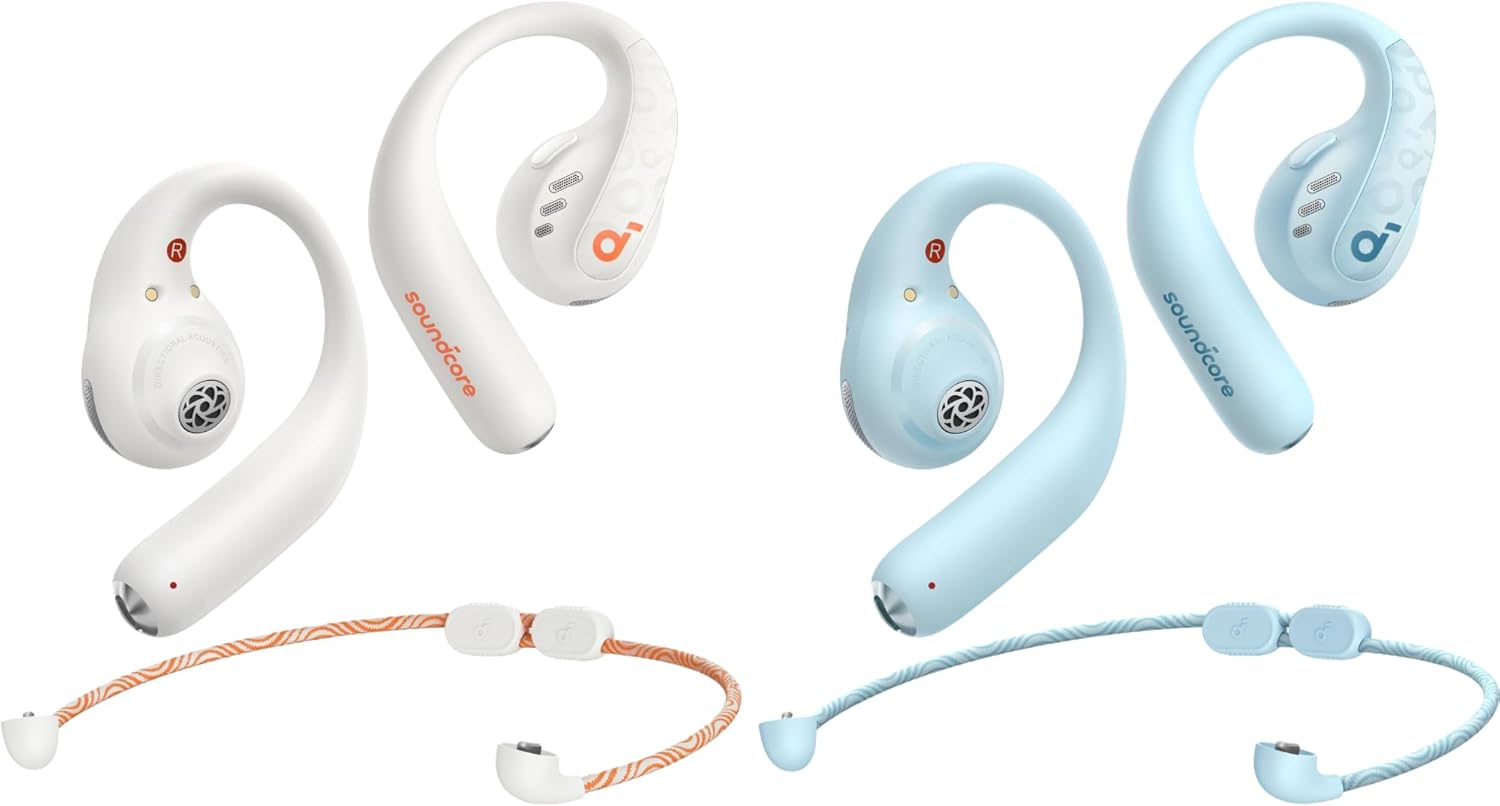
Soundcore AeroFit Pro
Best for: WFH users, commuters, anyone wearing earbuds 4+ hours daily. Skip if: You need ANC or noise isolation for a loud open-plan office.
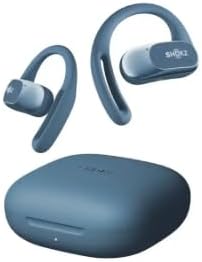
Shokz OpenFit
Best for: Runners, cyclists, remote workers on frequent calls. Skip if: You're on a tight budget — cheaper alternatives get surprisingly close for casual listening.
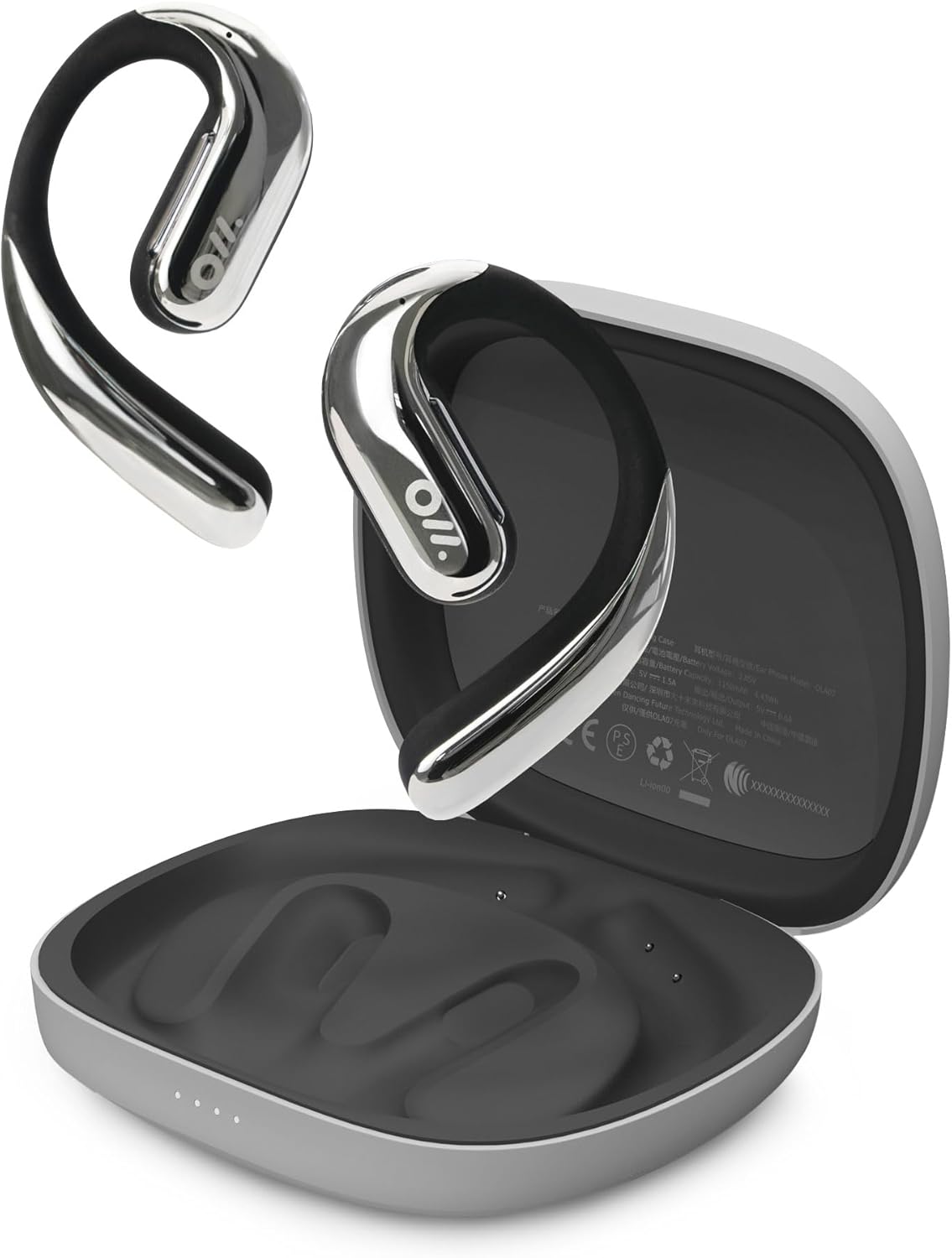
Oladance OWS Pro
Best for: All-day wearers, audiophile-leaning users who still want awareness. Skip if: You want a charging case for travel — the OWS Pro charges via the earbud itself, which some find inconvenient.
⚖️ Open-Ear Earbuds vs Bone Conduction Headphones — Which Is Better?
Open-ear earbuds vs bone conduction headphones is one of the most common questions I get from runners and cyclists. Both keep your ears open. Both give you situational awareness. But the experience is very different — and so is the sound quality.
| Feature | Open-Ear Earbuds | Bone Conduction |
|---|---|---|
| How sound travels | Air conduction through ear opening | Skull vibration to cochlea |
| Sound quality | Good — especially mids/highs | Weaker — thin, limited bass |
| Situational awareness | Excellent | Excellent |
| Comfort (4+ hrs) | Very comfortable | Can cause vibration fatigue |
| Audio leakage | Higher at volume | Medium — vibration at high vol |
| Swim/water use | Not recommended | Yes (OpenSwim models) |
| Price range | $50–$300 | $80–$250 |
| Best scenario | WFH, commuting, running | Swimming, hearing impairment |
My verdict: for most people, open-ear earbuds deliver a better audio experience than bone conduction. The vibration mechanic of bone conduction is clever but imposes real sound quality limits. Open-ear earbuds using air conduction are more natural-sounding, more comfortable for extended wear, and better for calls. Bone conduction wins only for swimming (with waterproof models) or users with specific hearing anatomy that makes open-ear fit difficult.
🏃 Open-Ear Earbuds for Running — Are They Secure Enough?
Open-ear headphones for running have exploded in popularity. The reason is obvious: you can hear traffic, other runners, and ambient environment while still having music or podcast audio. After running 5 sessions across 3 weeks with the AeroFit Pro and Shokz OpenFit, here's my assessment.
Fit security is the main concern. Earhook designs — used by both models I tested — stay put during moderate running. I ran 5K routes, light trail paths, and a 40-minute treadmill session. Neither model fell out. However, intense interval sprints created minor bouncing at the 6+ mph range with the AeroFit Pro. The Shokz OpenFit's tighter wraparound hook handled this better.
Additionally, the safety argument is real. I nearly missed a cyclist approaching from behind during one run while wearing my regular in-ear earbuds earlier that month. With open-ear earbuds, I heard the cyclist clearly from 20 meters out. For outdoor runners and cyclists, that situational awareness has practical safety value — not just convenience. See how open-ear stacks up against other options in our waterproof earbuds for running roundup.
😤 Open-Ear Earbuds for People Who Hate In-Ear Fit
Open-ear earbuds for people who hate in-ear fit might be the single best use case in this entire category. I hear from readers constantly: "I can't find tips that seal right," "They always fall out," "My ears hurt after an hour." For this group, open-ear earbuds are a genuine solution — not just a compromise.
The earhook design bypasses fit variation entirely. Your ear canal shape doesn't matter. There's no tip to find the right size for. No pressure buildup from an airtight seal. No suction feeling when you remove them. Open-ear simply rests at the ear's natural curve, anchored by a flexible hook around the outer ear.
For people with narrow ear canals, ear canal sensitivity, or recurrent ear infections, traditional earbuds cause real discomfort or even medical problems. Open-ear removes all of that friction. If you've struggled with in-ear fit across multiple products, this category is worth a serious look rather than buying another set of in-ear tips to try. Our list of best budget wireless earbuds includes open-ear options specifically for this use case.
🚫 Who Should Actually Skip Open-Ear Earbuds in 2026
Being honest matters more than selling earbuds. Open-ear earbuds are not a better version of regular earbuds. They are a different tool. Several groups of users should absolutely stick with traditional in-ear options.
Noise isolation is the biggest gap. If you commute on a loud subway, work in a busy open office, or study in a coffee shop, you need a seal to block environmental sound. Open-ear earbuds offer zero passive isolation. Every ambient sound reaches you just as if you were wearing nothing. Combine that with the limited bass response, and open-plan office users will find them nearly useless for focus work.
Moreover, audio leakage is a real social problem. At anything above 50% volume, people near you can hear your audio. Open offices, libraries, and quiet coworking spaces make open-ear earbuds socially intrusive. I tested this explicitly — my partner could clearly hear my podcast from 1.5 meters away at 65% volume on the AeroFit Pro.
Finally, if strong bass and high audio fidelity are why you buy earbuds, open-ear simply can't compete with good in-ear options at equivalent prices. For audio-first buyers, check our budget earbuds with multipoint Bluetooth — those deliver better sound quality dollar-for-dollar for pure listening.
✅ Open-Ear Earbuds — Category Pros & Cons
✅ What They Get Right
- Zero ear canal insertion — no fit issues
- All-day comfort: 5–6+ hour wear without fatigue
- Full situational awareness — hear your environment
- Excellent for calls — natural voice resonance
- No ear infection risk from canal blockage
- Great for running, cycling, commuting safely
- WFH use case is genuinely superior to in-ear
❌ Real Weaknesses
- Bass response noticeably lighter than in-ear
- High audio leakage — not office/library friendly
- Zero noise isolation for loud environments
- Price-to-audio-quality ratio lags behind in-ear
- Earhook fit can feel unusual initially (1 week adapt)
- Budget options under $50 sound poor — invest in $80+
📊 Full Comparison Table — 4 Open-Ear Earbuds
| Model | Price | Battery | Driver | IPX | Best For | Score |
|---|---|---|---|---|---|---|
| Soundcore AeroFit Pro | ~$79 | 9+27 hrs | 16.2mm dynamic | IPX5 | WFH / All-day | ⭐ 4.5/5 |
| Shokz OpenFit | ~$99 | 7+28 hrs | DirectPitch | IP54 | Running / Calls | ⭐ 4.4/5 |
| Oladance OWS Pro | ~$109 | 16 hrs direct | 18mm dynamic | IPX4 | Sound Quality | ⭐ 4.3/5 |
| Bose Ultra Open | ~$299 | 7.5+12 hrs | OpenAudio driver | IPX4 | Premium / Style | ⭐ 4.2/5 |
For iPhone users exploring open-ear options, our guide to best budget earbuds for iPhone users covers how these models behave specifically with iOS Bluetooth stacks. Samsung users can find context in our budget Galaxy Buds alternatives guide — some open-ear options now appear in that segment.
💬 People Also Ask
Open-ear earbuds are generally considered safer for long-term hearing health than in-ear models at equivalent volume levels. Because they don't seal the canal, they require higher volume to achieve the same perceived loudness — which can offset the benefit. Keep volume below 70% and follow WHO safe listening guidelines of under 80dB for 40 hours per week.
Most open-ear earbuds designed for exercise use earhook designs that stay secure during running and light gym work. However, high-intensity interval training and heavy lifting can cause minor movement. Models like Shokz OpenFit with tighter wraparound hooks perform better for intense exercise than clip-on styles like the Oladance OWS Pro.
Yes. Audio leakage is a real characteristic of open-ear earbuds. At 60–70% volume, people within 1–2 meters can typically hear your audio. This makes them unsuitable for libraries, quiet offices, and shared public transport. For private listening environments — working from home, running outdoors — leakage is a non-issue.
For WFH specifically, open-ear earbuds offer better all-day comfort and natural situational awareness compared to AirPods in-ear design. AirPods Pro's Transparency Mode mimics awareness, but it's processed audio — not the natural pass-through you get with open-ear. For 6+ hour desk sessions, open-ear generally wins on comfort and naturalness.
Based on three weeks of testing, the Soundcore AeroFit Pro is the best budget open-ear earbuds under $100 in 2026. It combines solid audio quality, IPX5 water resistance, 9-hour battery, and genuinely comfortable all-day fit at around $79–89. The Shokz OpenFit at ~$99 edges it for call quality and running stability.
❓ Frequently Asked Questions
Are open-ear earbuds worth it for commuting?
For outdoor commuting (walking, cycling), open-ear earbuds are absolutely worth it — the situational awareness benefit is genuinely safety-relevant. For subway or train commuting with high ambient noise, they're less useful because there's zero noise isolation and you'll push volume uncomfortably high to hear audio over background noise.
Do open-ear earbuds have good bass?
Open-ear earbuds have noticeably lighter bass than in-ear earbuds at equivalent prices. Without a canal seal, sub-bass frequencies dissipate into the air rather than building pressure in the canal. The Oladance OWS Pro and Soundcore AeroFit Pro have the best bass response in the budget-to-mid range, but neither matches a well-fitting in-ear option.
How do open-ear earbuds differ from bone conduction headphones?
Open-ear earbuds use air conduction — sound travels through air into your ear canal opening. Bone conduction transmits vibrations through your cheekbones directly to the cochlea. Open-ear typically delivers better sound quality and comfort for daily use. Bone conduction has an advantage specifically for swimming (with waterproof models) or users with certain types of hearing loss.
Are open-ear earbuds good for people with ear canal sensitivity?
Yes — this is one of the strongest use cases for open-ear earbuds. Because nothing is inserted into the ear canal, there's no pressure, no moisture buildup, and no tip material touching sensitive canal skin. Users with recurrent ear infections, narrow canals, or silicone tip allergies benefit significantly from switching to open-ear designs.
Can I use open-ear earbuds in a busy office?
Generally no, for two reasons. First, they provide zero noise isolation — every ambient sound passes through. Second, audio leakage means your colleagues can hear your content at moderate volume. Open-ear earbuds are best suited for private or semi-private environments like home offices, outdoor use, and low-noise coworking spaces.
How long do open-ear earbuds last on a single charge?
Most quality open-ear earbuds deliver 7–16 hours of earbud battery and 28–40 hours total with the charging case. The Oladance OWS Pro stands out with 16 hours on the earbud itself without a case. The Shokz OpenFit provides 7 hours earbud + 28 hours case. For all-day WFH users, all three tested models lasted a full workday without charging.
What is audio leakage and how bad is it on open-ear earbuds?
Audio leakage means sound from your earbuds is audible to people around you. On open-ear earbuds, this is noticeable — at 60–70% volume, someone 1–2 meters away can hear your content. At lower volumes (below 50%), leakage is minimal. This is an inherent characteristic of the open design, not a flaw unique to any specific model.
Are open-ear earbuds worth it for running specifically?
For outdoor running, open-ear earbuds are highly worth it due to safety benefits from full situational awareness. You hear traffic, pedestrians, and cyclists without removing earbuds or adjusting settings. The Shokz OpenFit is the best tested option for running due to its secure earhook fit and strong IP54 water resistance.
🏆 Final Verdict — Are Open-Ear Earbuds Worth It in 2026?
After three weeks of daily testing, my answer is: yes, for the right person. Open-ear earbuds worth it for WFH users, runners, people with ear sensitivity, and anyone wearing earbuds 4+ hours daily. They are genuinely poor choices for noise isolation, bass-heavy listening, or shared quiet environments.
The Soundcore AeroFit Pro at ~$79 is the best entry point. The Shokz OpenFit at ~$99 wins for running and call quality. Both represent the category's genuine strengths — all-day comfort, natural awareness, and surprisingly respectable audio — without demanding a premium budget. Additionally, these earbuds represent a real lifestyle shift, not just a gadget trend. That's what makes them worth serious consideration in 2026.
For a broader view of what your budget can get you, our full top budget TWS picks for 2026 includes open-ear options alongside traditional in-ear and ANC models — so you can compare the full landscape before buying.

M. Maksudur Rahman Titu
M. Maksudur Rahman Titu has tested more than 30 wireless earbuds for Trendy Tech Reviews, with a focus on the budget and mid-range segment. He purchased all four open-ear models in this article independently and wore each one daily for a minimum of one week before writing. His testing spans Android, iOS, Windows, and Mac environments.

M. Maksudur Rahman Titu is a tech reviewer and digital entrepreneur with over 3 years of hands-on experience testing wireless audio products, smartphones, and consumer electronics. Through Trendy Tech Reviews, he has personally tested 50+ pairs of earbuds and headphones across real-world environments — daily commutes, open offices, gym sessions, and long-haul flights.
His reviews focus on honest, spec-verified analysis designed to help everyday buyers make smarter purchasing decisions — without overspending on brand names. Titu’s testing methodology covers ANC performance, battery endurance, codec support, and app usability before any product is recommended. Contact: reviewstrendytech@gmail.com