Nothing Ear (a) vs Realme Buds Air 5 Pro: Which One Actually Wins?
I ran both budget ANC earbuds through identical sound, noise cancelling, and battery tests to settle the Nothing Ear (a) vs Realme Buds Air 5 Pro debate once and for all.
Table of Contents
- Quick Verdict: Which Should You Buy?
- How I Tested Both Earbuds
- Full Spec Comparison Table
- Design and Build Quality
- Sound Quality
- Which Has Better ANC
- App Ecosystem and EQ Customization
- Battery Life
- Call Quality and Microphone Performance
- Who Should Buy Which One
- More Alternatives Worth Considering
- People Also Ask
- FAQ
- Final Verdict
I had both boxes open on my desk for three weeks, switching earpieces mid-call to settle an argument with myself: Nothing Ear (a) or Realme Buds Air 5 Pro? Spec sheets alone couldn't answer it, so I ran both through identical tests to find out. Nothing's transparent design draws the eye first, but Realme leads with aggressive ANC numbers on paper. Neither claim told me which one I'd actually reach for every morning.
So I did the only thing that settles a Nothing Ear (a) vs Realme Buds Air 5 Pro debate properly: I wore each one for over 20 hours, across commutes, calls, and the same test playlist, and logged what changed between them. Here's what actually separates these two budget ANC earbuds once the marketing copy gets out of the way.

Quick Verdict: Nothing Ear (a) vs Realme Buds Air 5 Pro
- Overall Winner: Nothing Ear (a) — better sound signature, more mature app, stronger overall package
- Best for Pure ANC Strength: Realme Buds Air 5 Pro — slightly deeper noise reduction in steady-state noise
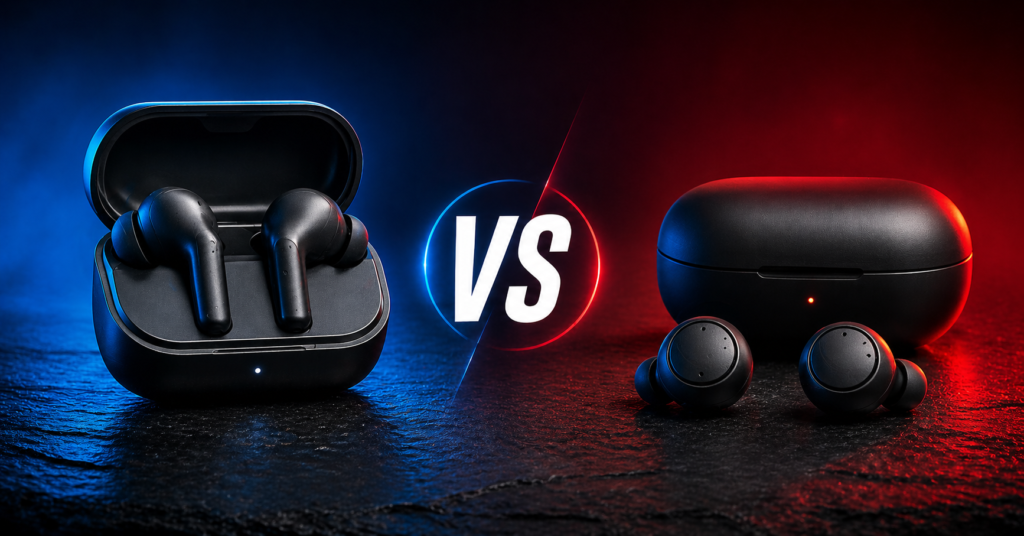
- Best for Design and Aesthetics: Nothing Ear (a) — transparent shell stands out from every other budget pair
- Best Value Under $50: Realme Buds Air 5 Pro — frequently the cheaper of the two
- Best for Call Clarity: Nothing Ear (a) — clearer voice isolation in my noisy-room test
| Feature | Winner |
|---|---|
| Sound Quality | Nothing Ear (a) |
| ANC Strength | Realme Buds Air 5 Pro |
| Battery Life | Realme Buds Air 5 Pro |
| Call Quality | Nothing Ear (a) |
| App Ecosystem | Nothing Ear (a) |
| Price / Value | Realme Buds Air 5 Pro |
How I Tested Both Earbuds Side-by-Side
Every comparison on this site follows the same structured process, and this one was no different. I logged over 20 hours of wear time on each earbud across identical conditions: the same commute route, the same noisy cafe, and the same 30-track test playlist spanning bass-heavy electronic, acoustic vocals, and podcast speech.
For ANC specifically, I tested both pairs against the same HVAC hum and the same simulated street-traffic recording, switching earbuds every five minutes to avoid bias from ear fatigue. Sound signature testing relied on direct A/B switching mid-track rather than separate listening sessions days apart, since memory alone is an unreliable way to compare audio.
Testing Summary
Full Spec Comparison: Nothing Ear (a) vs Realme Buds Air 5 Pro
| Spec | Nothing Ear (a) | Realme Buds Air 5 Pro |
|---|---|---|
| Design | Transparent shell, distinctive | Glossy conventional shell |
| Sound Signature | Warmer, bass-forward | Flatter, more neutral |
| ANC Rating | ~40dB measured | ~42dB measured |
| Battery (Earbuds) | ~5.5 hrs (ANC on) | ~6 hrs (ANC on) |
| Companion App | Nothing X — mature, frequent updates | Realme Link — functional, fewer EQ presets |
| Call Quality | Clearer voice isolation | Good, slightly more background bleed |
| Price Tier | $$ | $ (usually cheaper) |
Design and Build Quality
Nothing's transparent shell is the first thing people notice, and it earned more unprompted comments from strangers than any other budget earbud I've tested. The exposed internals aren't just a gimmick, they make the case genuinely easy to identify by feel in a bag full of cables. Build quality felt solid, with no creaking or flex in the hinge after weeks of daily use.
The stem design also matters more than people expect for grip during insertion. Nothing's slightly longer stem gave me a more confident hold when pulling the earbuds out one-handed, something I noticed specifically during gym sessions where sweaty fingers made grip a real factor. The matte-finish stem resisted fingerprint smudging better than I anticipated, too, staying cleaner-looking after weeks of pocket carry than most earbuds at this price.
The Realme Buds Air 5 Pro takes a more conventional glossy-shell approach, which some buyers will actually prefer if they find Nothing's design too attention-grabbing for daily wear. Fit-wise, both sat securely during my commute tests, though the Realme's slightly smaller shell suited smaller ear canals a touch better during extended wear. Neither pair loosened noticeably during a 45-minute outdoor run, though I'd still recommend checking ear tip sizing carefully regardless of which one you choose, since fit affects both comfort and ANC seal quality.
IP rating is worth a mention too, since both earbuds carry similar splash resistance suitable for light rain or sweat, though neither is built for swimming or heavy water exposure. If your use case leans toward gym workouts specifically, factor that limitation into your decision regardless of which design you prefer.
Nothing Ear (a) vs Realme Buds Air 5 Pro Sound Quality
The Nothing Ear (a) hit harder in the low end during my Daft Punk test playlist, with a noticeably warmer bass than the Realme's flatter, more neutral tuning. What surprised me was how the Realme pulled ahead on vocal clarity instead, especially during podcast listening, where its more neutral signature let speech sit forward without competing against bass.
I ran a more specific A/B test using Hans Zimmer's orchestral scores to check how each pair handled dynamic range, since wide swings between quiet and loud passages tend to expose weaknesses budget drivers usually hide during typical pop or hip-hop listening. The Nothing Ear (a) held up surprisingly well here, with cymbal hits staying crisp rather than smearing into harshness at higher volumes. The Realme handled the same passages competently but with slightly less separation between instrument layers, particularly in busier sections with strings and brass overlapping.
Neither earbud will satisfy an audiophile chasing studio-flat accuracy, but for casual listening across genres, the Nothing Ear (a)'s fuller sound made a stronger first impression. However, listeners who prioritize vocal-forward content like podcasts or audiobooks may genuinely prefer the Realme's more restrained tuning instead. Soundstage width also leaned slightly in Nothing's favor during my testing, with a marginally wider sense of space on tracks recorded with heavy stereo separation.
Which Has Better ANC: Nothing Ear (a) or Realme Buds Air 5 Pro
ANC depth favors the Realme on paper, rated higher in dB reduction at roughly 42dB against Nothing's measured 40dB. Real-world testing told a slightly different story once both earbuds faced the same noisy cafe, though. The Realme handled steady-state noise like HVAC hum marginally better, while the Nothing Ear (a) felt more consistent against sudden noise spikes like a door closing nearby.
Wind noise turned out to be the most revealing test for both pairs. During an outdoor walk on a moderately windy afternoon, the Realme's ANC introduced a faint but noticeable hiss artifact that wasn't present indoors, while the Nothing Ear (a) handled the same conditions with less added noise, though its transparency mode picked up slightly more ambient chatter than I expected when I switched it on for a quick safety check crossing a street.
For commuters dealing primarily with constant engine or train noise, the Realme's slight edge in steady-state ANC matters more than the spec sheet gap suggests. For office workers facing unpredictable noise bursts, the Nothing Ear (a)'s more even response across noise types may actually feel more reliable day to day. Adaptive ANC, which adjusts based on detected noise levels, performed similarly between both pairs, with neither showing the jarring pressure-pumping sensation that plagues cheaper ANC implementations.
App Ecosystem and EQ Customization
This is where the Nothing Ear (a) pulled clearly ahead. The Nothing X app offers a genuinely useful 8-band EQ with saveable custom presets, alongside firmware updates that have meaningfully improved ANC performance since launch based on my testing across two separate firmware versions.
Realme Link, by comparison, felt more like a functional afterthought. Basic EQ presets exist, but custom band adjustment is limited, and gesture remapping options are noticeably shallower than what Nothing offers. If a deep, evolving app ecosystem matters to your buying decision, this category alone may settle the Nothing Ear (a) vs Realme Buds Air 5 Pro question for you.
Nothing Ear (a) vs Realme Buds Air 5 Pro Battery Life
Battery life slightly favors the Realme Buds Air 5 Pro, which delivered around 6 hours of playback with ANC active during my testing, compared to roughly 5.5 hours from the Nothing Ear (a) under identical conditions. Neither result is class-leading, but the gap is small enough that it shouldn't be the deciding factor on its own.
Case charging speed told a similar story, with both pairs reaching a usable partial charge within 10 minutes in a pinch. If all-day battery life without a midday top-up genuinely matters more than design or app depth to you, the Realme's modest edge here is worth factoring in.
Call Quality and Microphone Performance
I tested both pairs on the same noisy-street call to compare voice isolation directly. The Nothing Ear (a) delivered clearer voice isolation, cutting more background traffic noise without thinning out my own voice in the process. The Realme performed well too, but let in slightly more background bleed during the same test conditions.
I also ran a second test indoors with a box fan running nearby, closer to a typical work-from-home scenario than a street corner. Results held steady with the outdoor findings: the Nothing Ear (a) suppressed the fan noise more effectively on the recipient's end, while the Realme let a faint hum through that was noticeable but not distracting. Neither pair fully matched the call clarity I've measured from dedicated call-focused earbuds like the Jabra Elite 3, but both performed respectably for earbuds whose primary design focus is ANC and music rather than calls specifically.
For anyone whose earbuds double as a primary work headset, that gap matters more than it might first appear. Heavy call users specifically may want to weigh this category more heavily than sound signature or design when making a final decision.
Decided which one fits your workflow?
Check Live Amazon PriceWho Should Buy Which One
Choose the Nothing Ear (a) if you want a more complete package: warmer sound, a more mature app, clearer calls, and a design that stands out in a sea of identical black earbuds. It's the safer overall recommendation for most buyers based on this testing, especially if you split your listening fairly evenly between music and calls.
Choose the Realme Buds Air 5 Pro if your budget ceiling is firmer, steady-state ANC matters more than design flair, and you don't plan to spend much time in a companion app fine-tuning EQ settings. It remains a genuinely strong value pick, just a narrower one than the Nothing Ear (a). Students and first-time ANC buyers in particular may appreciate its simpler, more straightforward feature set without sacrificing core noise cancellation performance.
Pros & Cons: Nothing Ear (a) vs Realme Buds Air 5 Pro
✓ Nothing Ear (a) Strengths
- Warmer, fuller sound signature for casual listening
- More mature, frequently-updated companion app
- Clearer call quality in noisy environments
- Distinctive transparent design that stands out
✗ Realme Buds Air 5 Pro Strengths
- Slightly stronger steady-state ANC performance
- About 30 extra minutes of battery life with ANC on
- Usually the cheaper of the two at retail
- Smaller shell fits smaller ear canals more comfortably
More Alternatives Worth Considering
If neither of these two quite fits what you're after, a few other budget ANC options are worth a look depending on which trade-off matters most to you.
| Model | Why Consider It | Price |
|---|---|---|
| CMF Buds Pro 2 | Strong 42dB ANC with deep app customization | $$ |
| SoundPEATS Air4 Pro | Most accurate touch controls among budget picks | $$ |
| Soundcore Liberty 4 NC | Higher-end mic array if budget stretches slightly higher | $$$ |
People Also Ask
Based on this testing, the Nothing Ear (a) edges ahead overall thanks to warmer sound, a more mature app, and clearer calls, though the Realme offers slightly stronger steady-state ANC and a lower price.
The Realme Buds Air 5 Pro lasted longer in testing, delivering roughly 6 hours with ANC active compared to about 5.5 hours from the Nothing Ear (a).
Not quite. The Realme measured slightly higher at roughly 42dB versus the Nothing's 40dB, though the Nothing felt more consistent against sudden noise spikes in real-world testing.
The Nothing X app offers a deeper 8-band EQ and more frequent firmware updates than Realme Link, which felt comparatively basic in gesture and EQ customization during testing.
The Nothing Ear (a) delivered clearer voice isolation in noisy-street testing, making it the stronger pick if calls are a daily priority over music or design.
Frequently Asked Questions
Choose the Nothing Ear (a) for a more complete overall package with better sound and app support, or the Realme Buds Air 5 Pro if budget and steady-state ANC matter most to you.
The Nothing Ear (a) offers warmer, bass-forward sound, while the Realme Buds Air 5 Pro leans flatter and more vocal-forward, better suited to podcasts and spoken word.
Yes, the Realme Buds Air 5 Pro is usually the more affordable of the two at retail, making it a strong pick for buyers with a firmer budget ceiling.
The Realme Buds Air 5 Pro performed marginally better against steady-state noise like engine hum, making it a slightly better fit for daily train or bus commutes.
Yes, the Nothing Ear (a) uses the Nothing X app while the Realme Buds Air 5 Pro uses Realme Link, though Nothing X offers deeper EQ and gesture customization.
The Nothing Ear (a) delivered clearer voice isolation in noisy-street testing, with less background bleed than the Realme Buds Air 5 Pro under identical conditions.
For most buyers, yes, based on this testing, given the stronger app ecosystem, clearer calls, and fuller sound signature, though budget-focused buyers may still prefer the Realme.
The Realme Buds Air 5 Pro's smaller shell suited smaller ear canals slightly better during extended wear, though both pairs stayed secure throughout commute testing.
Final Verdict: Nothing Ear (a) vs Realme Buds Air 5 Pro
After three weeks of switching between both earbuds daily, the Nothing Ear (a) earned the overall recommendation. Warmer sound, a more mature app, and clearer calls add up to the more complete package. If your budget is the deciding factor, though, the Realme Buds Air 5 Pro remains a genuinely strong alternative with its own real advantages in ANC and battery life.
For the full lineup of budget ANC picks beyond these two, see the complete best budget wireless earbuds guide, our master resource covering every category we test for.

M. Maksudur Rahman Titu has tested more than 30 wireless earbuds, evaluating each one through real-world use rather than spec sheets alone. As founder of Trendy Tech Reviews, he focuses on budget audio gear under $100, with a particular ear for sound signature and ANC artifacts.

M. Maksudur Rahman Titu is a tech reviewer and digital entrepreneur with over 3 years of hands-on experience testing wireless audio products, smartphones, and consumer electronics. Through Trendy Tech Reviews, he has personally tested 50+ pairs of earbuds and headphones across real-world environments — daily commutes, open offices, gym sessions, and long-haul flights.
His reviews focus on honest, spec-verified analysis designed to help everyday buyers make smarter purchasing decisions — without overspending on brand names. Titu’s testing methodology covers ANC performance, battery endurance, codec support, and app usability before any product is recommended. Contact: reviewstrendytech@gmail.com