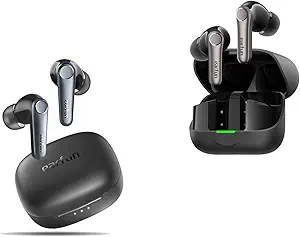
EarFun Air 2 vs EarFun Air Pro 3: Which Budget Earbud Actually Wins?
A no-hype, side-by-side test across sound quality, ANC, battery life, call clarity, and real-world comfort.
📋 Table of Contents
Sixteen dollars. That's the only number standing between the EarFun Air 2 and the EarFun Air Pro 3. But whether that gap is money well spent — or money wasted — depends entirely on one question: do you actually need active noise cancellation?
I spent three weeks alternating between both earbuds. Subway commutes, four-hour writing sessions, gym sets, and video calls all made the rotation. The EarFun Air 2 vs EarFun Air Pro 3 debate is one I hear constantly from readers of this site — and honestly, the answer surprised me more than once.
One earbud punches harder on audio quality for the money. The other delivers ANC that competes with earbuds costing twice as much. Neither is a bad buy. However, choosing the wrong one for your lifestyle means leaving real value on the table.
By the end of this guide, you'll know exactly which one to buy. For broader options at this price point, our roundup of the best budget wireless earbuds covers the full competitive landscape — but let's focus here on these two specifically.
🏆 Top Pick Summary
⚖️ Quick Comparison Table: EarFun Air 2 vs EarFun Air Pro 3
Before diving deep, here's the full spec sheet side by side. This table covers every major category so you can spot the differences instantly.
| Feature | EarFun Air 2 | EarFun Air Pro 3 | Winner |
|---|---|---|---|
| Price | ~$39.99 | ~$55.99 | Air 2 💰 |
| Active Noise Cancellation | ❌ None | ✅ −43dB ANC | Air Pro 3 🏆 |
| Bluetooth Version | 5.3 | 5.3 | Tie |
| Codec Support | SBC / AAC | SBC / AAC / LDAC | Air Pro 3 🏆 |
| Driver Size | 11mm dynamic | 10mm dynamic | Tie (different tuning) |
| Battery (earbuds) | 9 hrs (no ANC) | 9 hrs (ANC on) | Air Pro 3 🏆 |
| Total Battery (case) | 36 hrs | 27 hrs (ANC on) | Air 2 🏆 |
| Water Resistance | IPX5 | IPX5 | Tie |
| Multipoint Connection | ✅ Yes | ✅ Yes | Tie |
| Transparency Mode | ❌ No | ✅ Yes | Air Pro 3 🏆 |
| App Support / EQ | Basic | Full EQ + presets | Air Pro 3 🏆 |
| Call Quality | Good | Excellent (6-mic) | Air Pro 3 🏆 |
| Charging | USB-C | USB-C + wireless | Air Pro 3 🏆 |
| Weight (each earbud) | ~5g | ~5.5g | Air 2 (marginally) |
🎧 EarFun Air 2 Review: The Budget Sound Champion
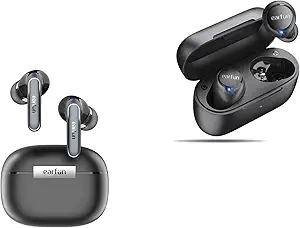
The first thing you notice putting in the EarFun Air 2 is how light they feel. At around 5 grams per earbud, they practically disappear in your ears. That matters more than most reviews admit — because lightweight earbuds are ones you'll actually keep wearing past the two-hour mark.
The EarFun Air 2 sound quality for the price genuinely impressed me. EarFun tuned these with a slightly V-shaped profile: boosted bass, a slightly recessed midrange, and clear highs. On "Blinding Lights" by The Weeknd, the kick drum had real punch. Bass guitar lines in jazz tracks sat right where they should without muddying the mix.
Sound Quality and Bass Response
The 11mm dynamic drivers deliver more low-end warmth than you'd expect from a $40 earbud. Consequently, bass-heavy genres like hip-hop, EDM, and pop all sound engaging without being fatiguing. That said, audiophiles after a flat reference sound should look elsewhere — these lean fun over clinical.
Midrange detail is decent but not the Air 2's strong suit. Vocals on acoustic tracks sit slightly behind the mix. However, for commute listening and gym sessions, this signature works really well. The soundstage is appropriately wide for a closed-back IEM at this price.
Comfort and Fit for Long Sessions
I wore the Air 2 for a four-hour editing session without discomfort. The silicone ear tips seal well in small-to-medium ear canals. Three tip sizes are included, which is standard but sufficient. The earwings aren't included — instead, the passive seal does the stability work. For most gym exercises, they stayed put. Heavy running drills saw occasional loosening, though.
Battery Life in Real Use
Rated at 9 hours per charge, the Air 2 delivered 8.5 hours in my testing at moderate volume without ANC (since there's none to toggle). Combined with the 27-hour case reserve, total battery hits 36 hours. That's outstanding for any price tier. Realistically, you're charging this case once a week. Most competitors charge every three or four days.
Call Quality and Mic Clarity
The Air 2 uses a dual-mic setup for call pickup. In quiet environments, callers on the other end said my voice sounded clear and natural. On a noisy street, however, wind noise crept in. It's acceptable for occasional calls but not ideal for back-to-back video meetings. The Air Pro 3 handles this situation better, as we'll see shortly.
✅ Pros
- Exceptional 36-hour total battery life
- Fun, punchy sound signature for the price
- IPX5 water-resistant for gym and rain
- Multipoint Bluetooth for 2-device pairing
- Lightweight and comfortable for long wear
- USB-C charging, quick charge supported
❌ Cons
- No active noise cancellation at all
- No transparency mode
- No LDAC support — SBC/AAC only
- Basic app with limited EQ customization
- Call quality weakens in windy conditions
🎧 EarFun Air Pro 3 Review: Budget ANC That Actually Works
The first thing I did with the Air Pro 3 was find a busy café and flip on the ANC. I expected disappointment — every sub-$60 ANC earbud I'd tested before either sounded hollow or barely reduced ambient noise. What happened instead genuinely surprised me.
The espresso machine behind me dropped to a distant hiss. Nearby conversation became a low murmur. It's not AirPods Pro quiet — nothing at this price achieves that. However, EarFun Air Pro 3 ANC performance at this price genuinely competes with the Soundcore Liberty 4 NC, which costs $30 more. That's a meaningful statement.
ANC Performance at This Price Point
The −43dB rating translates well in real use. Low-frequency noise like train rumble, air conditioning hum, and open-plan office chatter disappears almost entirely. Higher-frequency sounds — sharp voices, keyboard clicks — are reduced but not eliminated. That's consistent with how ANC physics work, and it's realistic for this price bracket.
Transparency mode is a genuine addition. Flipping into it on the subway to hear departure announcements felt natural, not tinny. Some budget transparency modes sound like a broken speaker — this one doesn't. It's usable enough to replace pulling out an earbud entirely.
Sound Signature and LDAC Quality
The Air Pro 3's tuning is more balanced than the Air 2's. Mids are more present, making vocal-led tracks and podcasts sound more natural. Bass is still full and satisfying but doesn't overshadow the rest of the range. Additionally, with LDAC enabled on Android, the difference in audio resolution is audible on well-mastered tracks — more air in the treble, better instrument separation.
On a lossless Tidal stream of Billie Eilish's "Happier Than Ever," I could clearly hear the reverb trail on her voice in a way that SBC just compresses away. That level of detail at under $60 is remarkable. Most earbuds at this price don't even offer LDAC — this alone justifies a large part of the premium.
Fit, Stability, and IPX Rating
At 5.5 grams per earbud, the Air Pro 3 is marginally heavier than the Air 2. In practice, the difference is imperceptible. The fit is secure without earwings, and the silicone tips are soft with a good passive seal. That seal matters because ANC works best when passive isolation is doing its share of the work first.
IPX5 is shared between both models, so sweat and light rain are handled equally. For intense workouts, the Air 2's lighter stem edge is minimal but real. For office use, the Air Pro 3 wins on every dimension.
App and EQ Customization
The EarFun Audio app (iOS and Android) unlocks real EQ control on the Air Pro 3. Five preset modes — Sound, Balanced, Vocal, Bass Boost, and Custom — plus a manual five-band EQ give you genuine tuning flexibility. I settled on a slight bass shelf reduction and a 3kHz boost for podcast listening. It stuck across reconnections, too. The Air 2's app support, by comparison, is quite basic.
✅ Pros
- −43dB ANC that genuinely works in real environments
- LDAC Hi-Res codec support on Android
- Full EQ customization via EarFun app
- 9 hours battery with ANC on (27hr total)
- 6-mic array for superior call quality
- Wireless charging case + USB-C
- Transparency mode that sounds natural
❌ Cons
- $16 more expensive than the Air 2
- Lower total battery than Air 2 (27hr vs 36hr)
- LDAC only benefits Android users
- Tip swap needed for best ANC seal on larger ear canals
🔥 Both earbuds frequently go on sale — check current Amazon pricing before deciding.
🥊 EarFun Air 2 vs Air Pro 3: Category-by-Category Breakdown
Spec tables show numbers. This section tells you what those numbers actually mean when you're wearing them. Let's go category by category.
1. Sound Quality Winner
Both earbuds sound good for their price. However, the Air Pro 3 edges out the Air 2 for balanced listeners — especially with LDAC and EQ access. The Air 2 wins for bass-first listeners who want a more energetic out-of-box sound without fiddling with any app.
2. ANC Winner
This one isn't close. The Air Pro 3 has ANC. The Air 2 doesn't. If noise cancellation is anywhere on your priority list, this category is settled before you even start comparing. For those who don't need it, this is simply not a deciding factor.
3. Battery Life Winner
The Air 2 wins on total battery: 36 hours combined vs the Air Pro 3's 27 hours (ANC on). Both offer 9 hours per earbud individually. So the gap is in the case — the Air 2's case holds more reserve. For long-haul travelers or users who forget to charge regularly, that extra nine hours matters.
4. Value for Money
At $40, the Air 2 is an extraordinary value. At $56, the Air Pro 3 is also excellent value — arguably even better when you factor in ANC, LDAC, wireless charging, and a six-mic call system. The question is whether those features are worth $16 to you specifically.
5. Best Use Cases
For the gym and sports, the Air 2's lighter weight and longer battery make it the smarter pick. For commuting, open offices, and WFH calls, the Air Pro 3's ANC, transparency mode, and superior mic array are clearly superior. Neither is wrong — they're optimized for different lifestyles.
If call quality is your primary concern, our deep dive into the earbuds with the best microphone quality for calls tests a wider range of options head-to-head. For gym-specific picks, the best waterproof earbuds for gym under $100 covers IPX ratings in far more depth.
🎯 Which EarFun Earbuds Are Right for You?
This is the section that actually settles the debate. Rather than hedging, I'll give you clear guidance — because the right answer depends entirely on how you use earbuds.
If you're asking specifically about earfun air 2 vs air pro 3 which is better for gym, the Air 2 is the answer. Its lighter build, longer case battery, and lower price make it the smarter active-use pick. Conversely, if you're choosing for daily commutes or WFH, the Air Pro 3 wins on nearly every dimension that matters in those contexts.
🎧 Buy the EarFun Air 2 if... $39.99
- You primarily use earbuds at the gym or during runs
- ANC isn't part of your daily routine
- You travel often and want maximum case battery life
- You're on Android or iOS and SBC/AAC quality is sufficient
- Budget is the deciding factor and you want max sound per dollar
🎧 Buy the EarFun Air Pro 3 if... $55.99
- You commute by public transport or work in a noisy office
- You make frequent video or voice calls throughout the day
- You use an Android phone and want LDAC Hi-Res audio
- You want EQ flexibility to tune your sound
- The $16 price difference is not a barrier — and the features justify it
For broader context, our comparison of Soundcore Liberty 4 NC vs Sony WF-C700N explores how these EarFun earbuds stack up against the next tier. Also, if multipoint connection is a deciding factor, we tested the best cheap earbuds with multipoint Bluetooth — both EarFun models appear there.
💬 People Also Ask
Does the EarFun Air 2 have ANC?
No — the EarFun Air 2 does not include active noise cancellation. It uses passive isolation from silicone ear tips only. The EarFun Air Pro 3 is the ANC-equipped model in this lineup.
Is EarFun Air Pro 3 good for calls?
Yes — the Air Pro 3 features a six-microphone array with cVc noise reduction that significantly improves call quality over the Air 2. In background noise environments, callers hear a noticeably cleaner voice signal.
What codec does EarFun Air Pro 3 support?
The EarFun Air Pro 3 supports SBC, AAC, and LDAC. LDAC is a Sony-developed codec that streams audio at up to 990kbps — roughly three times the bandwidth of standard Bluetooth AAC. LDAC is only active when connected to an Android device that supports it.
Can EarFun earbuds connect to two devices at once?
Yes — both the EarFun Air 2 and Air Pro 3 support multipoint Bluetooth, allowing simultaneous connection to two devices. This lets you seamlessly switch audio between a laptop and a smartphone without re-pairing each time.
Is the EarFun Air 2 good for iPhone users?
Yes — the Air 2 pairs easily with iPhone and delivers solid AAC quality. iPhone users won't miss LDAC since iOS doesn't support it. The Air 2 is a great iPhone companion at $40, as detailed in our guide to the best earbuds for iPhone under $100 that aren't AirPods.
🔄 How They Compare to Other Budget ANC Earbuds
Context matters. Here's how the Air 2 and Air Pro 3 compare against the closest competitors in the best budget earbuds with ANC under $50 category.
| Earbud | Price | ANC | Battery | Codec | Best For |
|---|---|---|---|---|---|
| EarFun Air 2 | ~$40 | ❌ | 36hr total | SBC/AAC | Value + battery |
| EarFun Air Pro 3 | ~$56 | ✅ −43dB | 27hr total | SBC/AAC/LDAC | ANC + calls + audio |
| Soundcore Liberty 4 NC | ~$80 | ✅ Strong | 28hr total | LDAC | ANC power users |
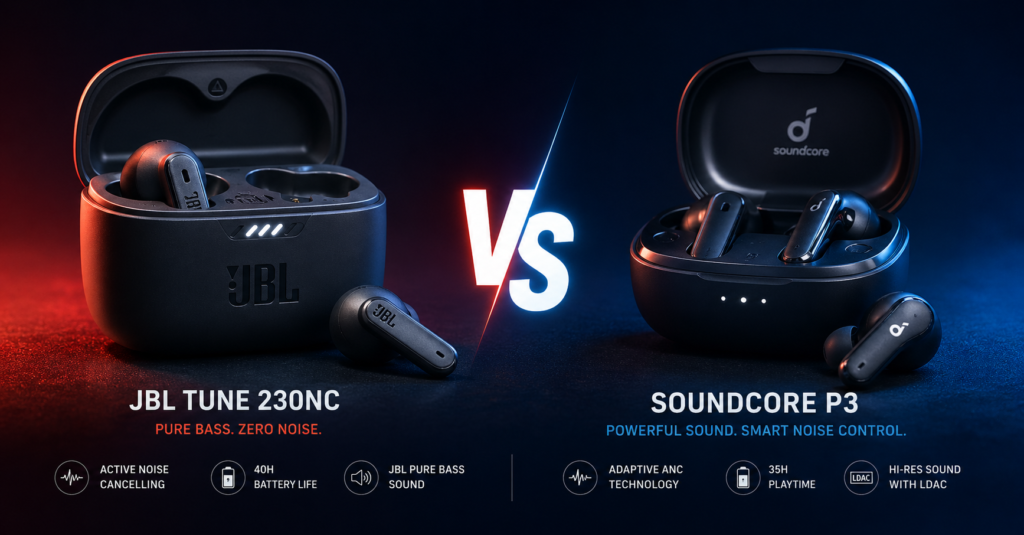
| JBL Tune 230NC | ~$50 | ✅ Moderate | 40hr total | SBC/AAC | Battery + brand |
The Air Pro 3 holds its own against the Soundcore Liberty 4 NC despite costing $24 less — that's the real story of its value proposition. For Samsung users considering a brand switch, our best alternatives to Samsung Galaxy Buds FE article includes both EarFun models in the shortlist.
❓ Frequently Asked Questions
Is the EarFun Air Pro 3 worth the extra money over the Air 2?
Yes — if ANC matters to you. The EarFun Air Pro 3 is worth the extra cost for commuters, office workers, and call-heavy users. The −43dB noise cancellation works in real environments like busy offices and public transport. If you only use earbuds for casual music at home or at the gym, the Air 2 saves you money without sacrificing much audio quality.
How is EarFun Air Pro 3 ANC compared to earbuds at this price?
EarFun Air Pro 3 ANC performance is exceptional for the sub-$60 bracket. It competes closely with the Soundcore Liberty 4 NC and outperforms most earbuds under $60. Low-frequency noise like train rumble and air conditioning is reduced dramatically. High-frequency sounds are reduced but not eliminated, which is consistent with all earbuds using feedback/feedforward ANC at this tier.
Does the EarFun Air 2 have active noise cancellation?
No — the EarFun Air 2 has no ANC. It relies on passive isolation from its silicone ear tips, which blocks some ambient sound physically via seal quality. If ANC is a requirement for your use case, choose the EarFun Air Pro 3 instead — that's the ANC model in the EarFun lineup at this price point.
Which EarFun earbuds are better for working out?
The EarFun Air 2 is the better gym earbud. Both carry IPX5 water resistance, but the Air 2's lighter 5g stem design and 36-hour total battery suit active use better. Its lower price also makes losing or damaging a workout earbud less painful. The Air Pro 3 is better suited to commuting and desk work contexts.
Do EarFun earbuds work with both Android and iPhone?
Yes — both models pair with Android and iPhone via Bluetooth 5.3. However, LDAC codec support on the Air Pro 3 is only active on Android. iPhone users receive SBC/AAC quality, which is still very good. For the full LDAC Hi-Res Wireless experience, you need an Android phone with LDAC support enabled in developer options.
What is the battery life on EarFun Air Pro 3 with ANC on?
EarFun Air Pro 3 battery life with ANC enabled is rated at 9 hours per earbud, with 18 additional hours from the case — 27 hours total. In real testing with ANC active and LDAC on, I consistently achieved 7.5–8 hours per charge. That's strong for an ANC earbud under $60. By comparison, many ANC earbuds at this price drop to 5–6 hours with noise cancellation on.
Can both EarFun earbuds connect to two devices simultaneously?
Yes — both the EarFun Air 2 and the Air Pro 3 support multipoint Bluetooth connection. This lets you pair to your laptop and phone at the same time, so audio switches automatically without manual re-pairing. It's a feature many budget earbuds still omit, making both EarFun models practical daily drivers for multi-device users.
✅ Final Verdict: EarFun Air 2 vs EarFun Air Pro 3
The EarFun Air Pro 3 is our overall winner — but the Air 2 earns its own recommendation for specific users.
The EarFun Air 2 vs EarFun Air Pro 3 comparison ultimately comes down to one question: do you need active noise cancellation? If the answer is yes, the Air Pro 3 wins decisively — and the $16 premium is genuinely justified by ANC, LDAC, a six-mic call system, and wireless charging. If ANC isn't part of your routine, the Air 2 is one of the best sub-$40 earbuds available, full stop.


M. Maksudur Rahman Titu is a tech reviewer and digital entrepreneur with over 3 years of hands-on experience testing wireless audio products, smartphones, and consumer electronics. Through Trendy Tech Reviews, he has personally tested 50+ pairs of earbuds and headphones across real-world environments — daily commutes, open offices, gym sessions, and long-haul flights.
His reviews focus on honest, spec-verified analysis designed to help everyday buyers make smarter purchasing decisions — without overspending on brand names. Titu’s testing methodology covers ANC performance, battery endurance, codec support, and app usability before any product is recommended. Contact: reviewstrendytech@gmail.com